
TripBuddy Guide
Madrid doesn’t announce itself the way Barcelona does. It unfolds — in plazas at midnight, in vermouth bars at noon, in museums you can walk between without ever getting on a train. That walkability is the good news, and it’s also why your base matters: Madrid’s neighborhoods each have a distinct rhythm, and staying in the wrong one for your trip means either a long walk home after dinner or a quiet street when you wanted life.
The three names first-timers ask about most — Centro, Salamanca, and Malasaña — cover most trips well. Here’s how they actually differ.
Sign up for monthly travel guides
The short answer
- First trip, classic sights: Centro — Sol, Gran Vía, and the big museums within walking distance.
- Elegant, calm, and upscale: Salamanca — wide avenues, quiet streets, and polished hotels.
- Local life, bars, and late nights: Malasaña — indie shops, vermouth bars, and Madrid’s most neighborhood feel.
- Food and market mornings: La Latina and Lavapiés — tapas streets and the Sunday Rastro market.
- Budget and easy transport: Around Atocha station — well connected, less pretty, genuinely practical.
Centro: the greatest-hits base
Centro is Madrid’s historic heart: Puerta del Sol, Gran Vía, Plaza Mayor, the Royal Palace, and the museum triangle of the Prado, Reina Sofía, and Thyssen within a walkable core. Hotels here range from grand old properties to modern chains, and almost everything a first-timer wants is on foot.
Stay here if: it’s your first visit, your trip is short, or you want to step out of your hotel and be in Madrid immediately. Evenings are easy — dinner, a plaza, and a late stroll are all right there.
Know before you book: Centro is also the noisiest and most tourist-facing part of the city, especially around Sol and Gran Vía. If you sleep lightly, ask for a room away from the street or pick a quieter side street a few blocks off the main drag. A courtyard-facing room can be the best money you spend in Madrid. Our guide to reading hotel reviews like a pro will help you spot noise complaints before you book.
Salamanca: Madrid at its most elegant
Northeast of Centro, Salamanca is Madrid’s polished residential district: wide, tree-lined avenues, high-end shopping on Calle Serrano, quiet streets, and some of the city’s best hotels. It feels calm, grown-up, and a little removed — which is exactly the point for travelers who want it.
Stay here if: you value quiet nights, elegant hotels, and easy mornings, or you’re traveling for business mixed with sightseeing. Salamanca is also a strong pick for travelers who prefer a neighborhood that winds down rather than winds up.
Know before you book: Salamanca is less about street life and more about good addresses. If your idea of a Madrid evening is hopping between tapas bars until midnight, you’ll be walking or taking the metro back from livelier districts. Check the walk to the nearest metro station — Salamanca’s blocks are long, and the distance on the map can surprise you.
Malasaña: the neighborhood Madrid lives in
North of Gran Vía, Malasaña is Madrid’s indie quarter: vintage shops, small plazas, vermouth bars, and a proudly local, slightly scruffy charm. It was the heart of Madrid’s post-Franco cultural movement, and it still feels like the place where Madrid talks to itself rather than to tourists.
Stay here if: you want local life, late dinners, and bars you can walk home from, or you’re a repeat visitor who already did the big sights. Malasaña rewards travelers who like to wander without an agenda.
Know before you book: Malasaña stays up late, especially on weekends, and its streets are narrow — noise carries. If you’re an early riser with a museum-heavy plan, a quieter street or a higher floor helps. Families weighing space and noise should also read our family hotels guide before choosing a small Malasaña apartment over a full-service hotel.
Sign up for monthly travel guides
La Latina and Lavapiés: tapas streets and market mornings
South of Centro, La Latina is Madrid’s tapas heart — Cava Baja and Cava Alta are streets built for crawling from bar to bar — and its Sunday El Rastro flea market is a Madrid institution. Lavapiés, next door, is the city’s most multicultural district, with global restaurants and a younger, artsier edge.
Stay here if: food is the headline, you like markets and street life, or you want a base that feels lived-in rather than polished. Sunday in La Latina, market first and tapas after, is one of Madrid’s best days.
Know before you book: these are older, denser streets, and some buildings have no lift — check access if stairs are an issue, and read recent reviews for noise on market Sundays.
Around Atocha: the practical pick
The area around Atocha station trades charm for sense: the train station, the Reina Sofía, and the Retiro park are close, the metro connects everywhere, and hotels tend to be better value than in Centro or Salamanca. It’s the base for travelers who care more about the trip than the address.
Stay here if: you’re arriving or leaving by train, your budget is tight, or you’re using Madrid as a base for day trips — Toledo, Segovia, and Ávila all run from Atocha.
The Madrid rhythm that should shape your choice
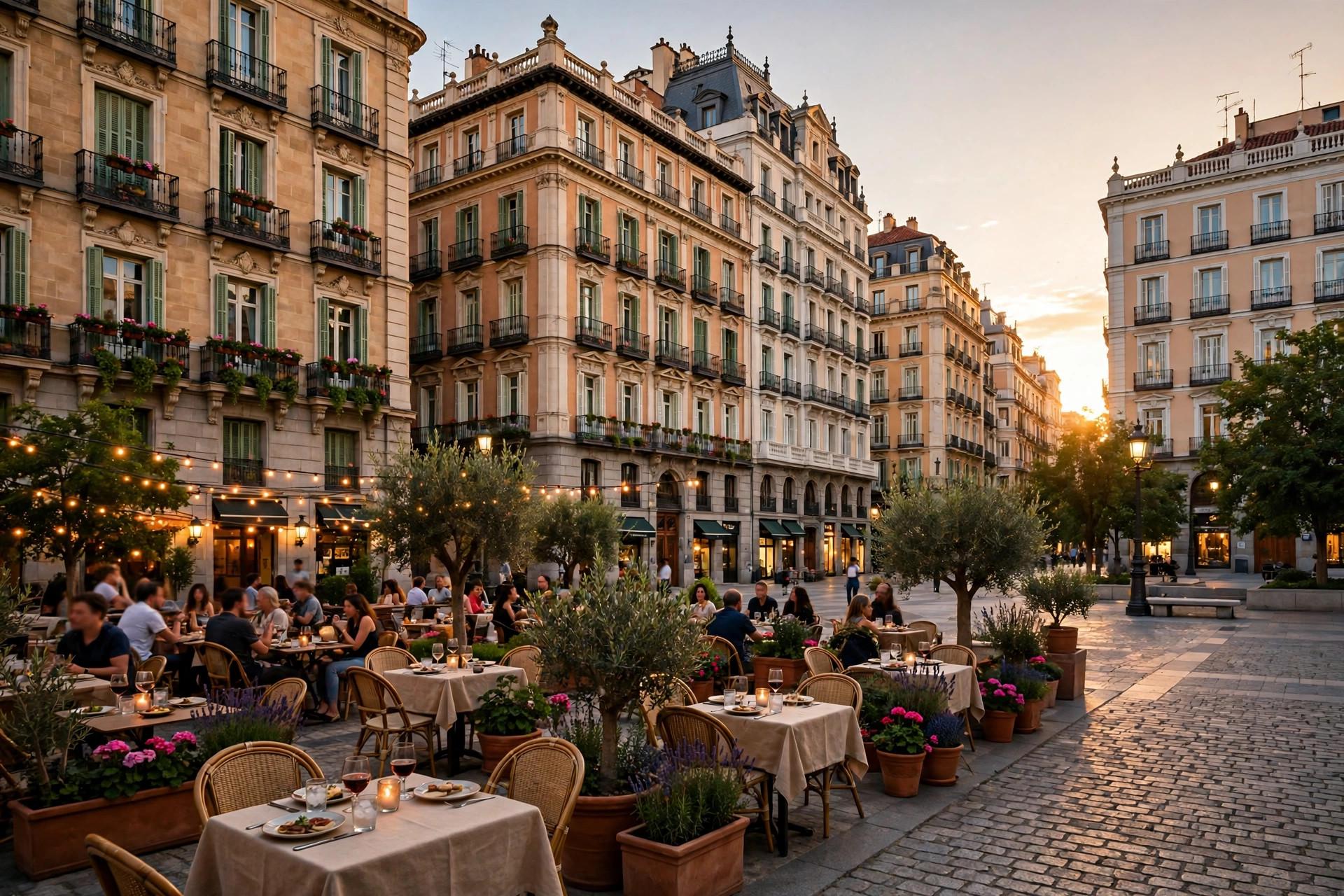
Madrid eats late, stays out late, and sleeps in. Dinner at 9 or 10 pm is normal, and the city’s best hours are often after dark. That has a practical consequence for your hotel choice: a base that feels perfect at noon can feel dead at midnight, and a lively base can feel loud at 8 am when you’re trying to sleep off a late dinner.
So match your base to your hours, not just your sights. Museum-heavy days and early nights point to Salamanca or a quiet Centro side street. Tapas crawls and late plazas point to Malasaña or La Latina. And whatever you pick, check the metro: Madrid’s metro is excellent, and a hotel within a short walk of a station makes every other choice forgiving.
Day trips and longer stays
Madrid is also one of Spain’s best day-trip bases, and that should influence your hotel choice more than most guides admit. Toledo, Segovia, and Ávila are all easy train rides, and a base near Atocha or a central metro line makes those mornings painless — you’re on the train before the tour buses, and home for a late Madrid dinner.
For longer stays, the same logic that favors apartments elsewhere applies here: a week in Madrid is a week of markets, cooking, and laundry, and a serviced apartment in Malasaña or La Latina can beat a hotel room on both space and sanity. Just check the building’s lift, the street noise, and the check-in process before you commit — Madrid’s older buildings are charming until you’re carrying a suitcase up four flights.
How to choose, in one pass
- First trip, classic sights? Centro — on a quiet side street if you sleep lightly.
- Quiet and elegant? Salamanca, near a metro station.
- Local life and late nights? Malasaña, higher floor, weekend noise in mind.
- Food and markets? La Latina, checking lift access.
- Trains and value? Around Atocha, with Retiro and the museums close by.
—
TripBuddy may earn a commission when you book through links on this page, at no extra cost to you.
Still deciding between Centro and Malasaña for your dates? Compare hotel deals on TripBuddy’s hotels page and pick the base that matches your Madrid hours — the right neighborhood makes the whole trip easier.
Last reviewed: October 26, 2026