
TripBuddy Guide
Traveling with kids quietly rewrites the definition of a “good hotel.” The lobby fountain that once read as charming now reads as a hazard. The rooftop bar you once booked for is irrelevant; what matters is whether everyone can sleep at a reasonable hour. A five-star with a gorgeous spa can still be a bad family hotel — and a plain three-star can be perfect if it gets the basics right.
Those basics are predictable. Once you know what to look for, you can screen any hotel listing in about five minutes.
Sign up for monthly travel guides
The short answer: the family-hotel checklist
Run every listing through these six questions:
- Can everyone actually sleep? Check the bed configuration, connecting-room options, and crib/rollaway availability — not just the photos.
- Are there kid-friendly amenities? A shallow pool, included breakfast, and laundry matter more than a spa and a concierge.
- Is the location workable? Near parks or playgrounds, easy transit, walkable food — and away from loud nightlife streets.
- Do the policies fit your kids’ ages? Child-stay-free rules, extra-bed rules, and cancellation terms all vary.
- Can you feed them easily? Breakfast inclusion, nearby groceries, and a kitchenette for longer stays remove most mealtime stress.
- Is the room itself safe and quiet? Balcony locks, window safety, and a quiet floor beat a great view.
Room configuration that actually works
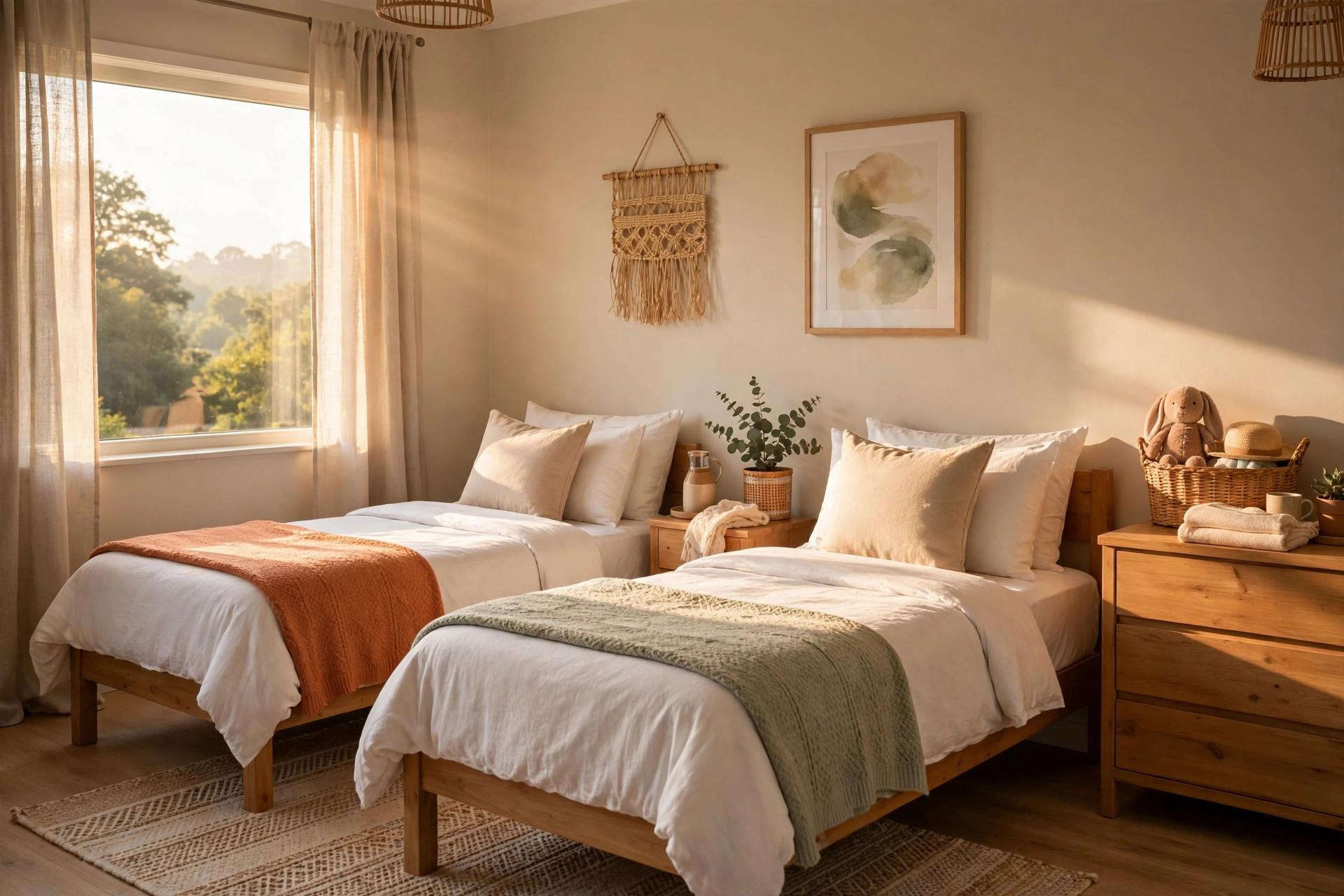
Start with the sleeping plan, not the square footage. “Sleeps four” sometimes means two beds and a couch that isn’t really a bed — large rooms that only work on paper are the most common family booking mistake.
For one or two small kids, a single room with a crib can work fine, but cribs aren’t guaranteed: hotels often have a limited number, and some charge for them while others provide them free. Ask when you book, not when you arrive.
For older kids, there are three realistic shapes. Connecting rooms — a door between two spaces — give you togetherness plus privacy, the best of all worlds. A suite with a separate living area lets parents stay up while kids sleep in the other room. Two adjacent rooms are the fallback when neither exists. Each step up costs more, but exhausted parents who can close a door will pay almost anything for that door by night three.
Rollaways sit in the middle ground. Some hotels provide them free, some charge, and some don’t have them — ask about availability and charges directly, because listing photos never show the rollaway.
Our guide to hotel room types decodes the listing jargon.
The amenities that matter with kids
Look past the amenities hotels lead with and check for the ones that change a family trip: a pool with a shallow entry or a children’s area (a deep-only lap pool is decoration for your family, not an amenity), included breakfast (multiply a buffet by four or five mouths and the cost adds up fast), on-site or nearby laundry (kids go through clothes at a rate no packing plan survives), and a kitchenette — or at least a fridge and microwave — for longer stays.
Two quiet ones people forget: blackout curtains and soundproofing. Children who sleep at home in the dark won’t adapt to a room facing a lit billboard, and thin walls mean your 8 p.m. bedtime gets soundtracked by the neighbors. Search recent reviews for “noise” and “sleep” before you commit.
Location with kids
Prioritize parks or playgrounds nearby — a green space within walking distance is the most useful thing a family neighborhood can offer, because kids need somewhere to burn energy that isn’t your hotel room. Easy transit or simple taxi access matters too, since tired children and long walks are a bad combination at the end of a sightseeing day.
Check what’s around for food: a bakery, a casual restaurant, and a small grocery within a few blocks remove most mealtime planning. And avoid the streets above and around late-night bars and clubs — what reads as “vibrant nightlife” in a listing reads as “bass until 2 a.m.” to a parent with a sleeping toddler. Reviews that mention families and easy walking are the green light; reviews that mention noise are the red one.
Sign up for monthly travel guides
The policies to read before you book
Hotels define “child” differently, and the age cutoff for staying free in a parent’s room varies. An 11-year-old who stays free at one hotel may count as a full adult at another, with an extra-person charge attached.
Extra-bed and occupancy rules deserve the same attention. Rooms have maximum occupancies that fire codes enforce, so “sleeps four” may legally mean exactly that — five people in the room is a refusal at check-in, not a gray area. If your family is bigger than the standard room, sort the bedding before you book.
Cancellation terms matter more with kids because kids are unpredictability engines. A strict no-refund rate looks cheap until a fever appears two days before departure. Flexible cancellation costs more upfront but is often the cheaper bet for family travel — read the deadline and refund terms, and weigh them against how likely your plans are to change.
Eating and logistics
First, the breakfast question: compare a rate that includes breakfast against the same room without it, then multiply the breakfast price by everyone eating it. With three or four kids, “included breakfast” is often worth far more than it looks — and even when it isn’t, feeding everyone downstairs without leaving the hotel has real value on rushed mornings.
Look for a grocery or convenience store within a few blocks. A hotel near one beats a hotel with a fancy minibar: snacks, milk, and forgotten essentials become a five-minute errand instead of a production. For stays longer than a few nights, a kitchenette or apartment-style room changes the trip — a simple breakfast, reheated leftovers, or a bottle at 3 a.m. without treating every meal as an event. And if your flight lands early, ask about early check-in when you book rather than hoping at the front desk — with tired kids, a confirmed early room beats a hopeful lobby wait.
Safety and sanity basics
A quick scan that keeps a trip uneventful. If the room has a balcony, check the lock and the railing gap before the kids discover it. Windows that open wide on an upper floor should have restrictors or locks you can engage.
Ask for a room on a quiet floor, away from elevators, ice machines, and the pool deck — a free request with a big payoff for sleep. And do a two-minute sweep when you arrive: outlets within reach of crawling toddlers, small hazards left by the previous guest, the bathroom door lock. Two minutes now saves an anxious week.
Putting it together
Family hotel booking isn’t about the fanciest property — it’s about the one where everyone sleeps, eats, and feels comfortable. Run the six-question checklist against every listing: sleep configuration, kid-friendly amenities, workable location, kid-aware policies, easy food, and a safe, quiet room. The hotel that passes all six will almost never have the prettiest lobby photos, and it will almost always be the one your kids remember fondly.
If you’d rather not run that checklist yourself for every trip, let a TripBuddy travel advisor sort the family logistics — matching room setups, cribs, quiet floors, and cancellation terms to your family’s ages and dates is exactly the detail work advisors do.
Related reading: our comparison of all-inclusive vs. booking your own hotel lays out the bundled-resort trade-offs honestly, and our hotel room types guide helps you decode what any listing actually promises.
TripBuddy may earn a commission when you book through links on this page, at no extra cost to you.
Want one practical, money-saving travel guide like this each week? Join the TripBuddy newsletter and get the next one first.
Last reviewed: September 2026