
TripBuddy Guide
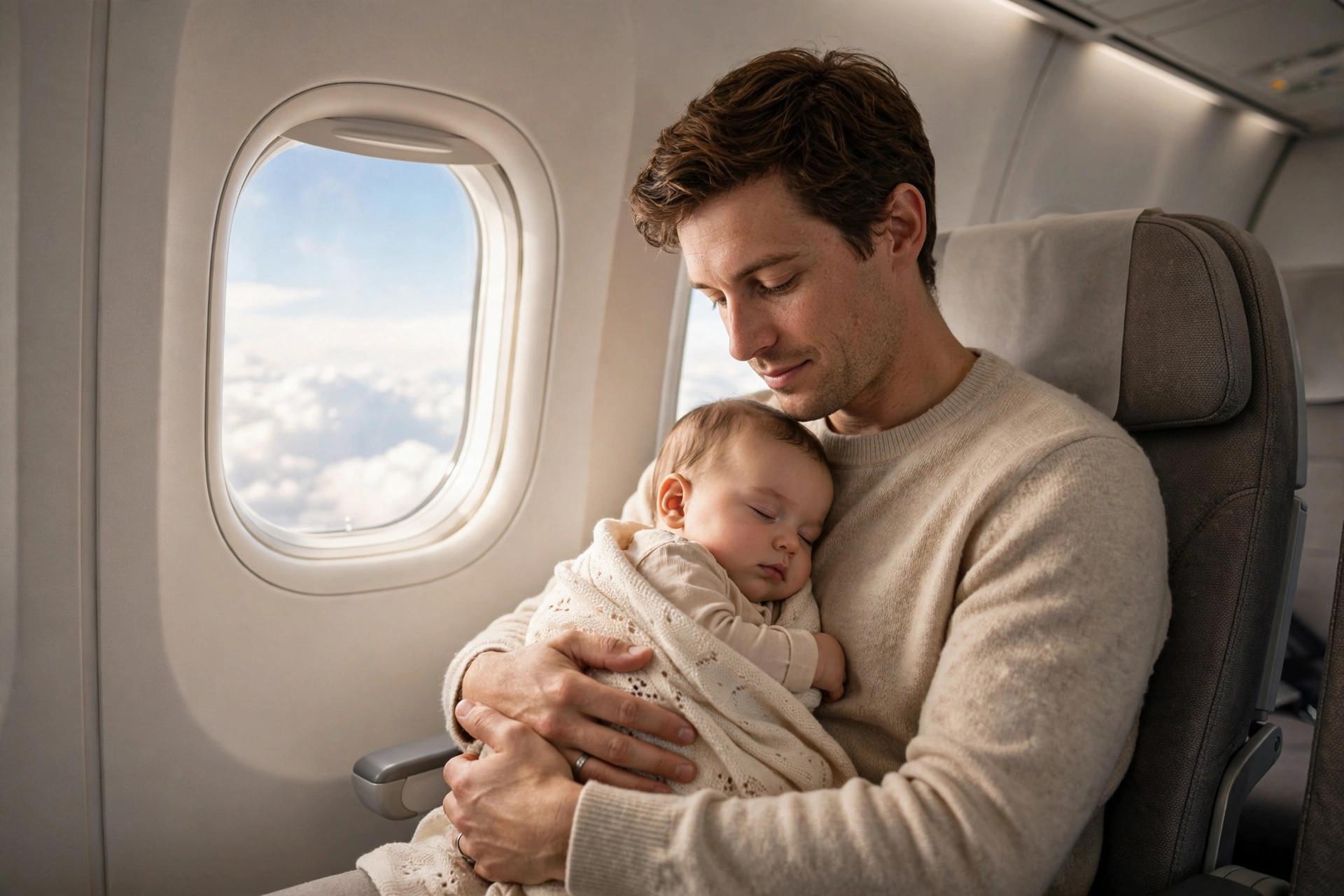
You’ve done this before on a trip to visit family in another state: your baby, under two, sits on your lap and flies for free. Then you book the trip to visit family overseas — or your first real family vacation abroad — and the confirmation shows a line item for the baby that is hundreds of dollars higher than you expected.
That’s not a mistake. It’s the lap infant rule that almost nobody warns new parents about, and it catches families by surprise on international flights every single week.
Sign up for monthly travel guides
The short answer: the 10%-of-fare rule
The framework is simple, even if the surprise is real:
- On domestic US flights, a lap infant (a child under 2 held on an adult’s lap) generally flies free — no fare, just the usual taxes where they apply.
- On most international flights, the lap infant gets charged 10% of the adult fare, plus international taxes and surcharges. This is the standard rule at American, Delta, Lufthansa, Air France, and Emirates, per a September 2026 roundup of carrier tariff rules.
- The percentage is what bites in premium cabins. Example only: on an adult fare of $4,500 (say, business class), 10% is $450 — before taxes and surcharges are added.
- There are exceptions. One major one arrived in August 2026 — Alaska Airlines now issues lap-infant tickets on its own international flights, including Hawaiian-operated ones, and charges taxes and fees only on its own Atmos award tickets.
So before you book international travel with a baby, run the math on your specific airline and fare class. “Free” is the domestic rule, not the global one.
Why the international rule works this way
A lap infant isn’t a “no ticket” passenger internationally. The baby gets an actual ticket — an infant fare — issued in their name, tied to the adult’s reservation, and needs identification. International carriage rules and foreign taxes are why the 10%-plus-taxes structure exists, and why airlines can’t always just waive it even if they wanted to.
The practical consequence: budget for the infant line item before you book, not after. On a modest economy fare the fee might be a manageable surprise; on a premium-cabin fare or a multi-leg itinerary, it can rival the cost of an entire adult ticket on some routes. And because the infant fare is calculated as a percentage of your fare, the more expensive your seat, the more your baby’s “free” lap ride costs.
A newer wrinkle worth knowing: on August 18, 2026, Alaska Airlines began issuing lap-infant tickets on its own international flights (including Hawaiian-operated flights), and on its own Atmos award tickets the charge is taxes and fees only. Partner awards remain blocked for lap infants, so this exception doesn’t extend to flights booked through partner programs — but it shows the industry isn’t entirely uniform, which is exactly why you check your specific booking rather than assuming either “free” or “10%.”
How lap infants are actually booked (it’s clunkier than you think)
Here’s the part that frustrates parents at 2 a.m. with a crying baby in one arm: you often cannot add a lap infant cleanly online. Common patterns:
- Some airlines let you add “infant in lap” during the initial booking flow; others require you to book the adults first, then call to add the infant.
- Either way, the infant needs their own ticket — a paper or electronic infant ticket linked to your reservation.
- For international travel, the infant also needs a passport (no exceptions for babies — yes, even newborns, and yes, the photo is as chaotic as you imagine). Some destinations require a visa for the infant as well; check entry rules for your destination, not just for the adults.
Do this well in advance. Adding an infant by phone the week of travel, on top of securing a passport appointment for a newborn, is a stress combination nobody needs. If you’re still in the “when should we even book” stage, the guidance in when to book your flight is worth reading — family fares and infant fees change how thresholds work.
The turns-2-during-the-trip rule
This one is genuinely unforgiving: if your baby turns 2 during the trip, most airlines require a purchased seat — at the child fare — for the return portion. The rule exists because a 2-year-old may not legally ride as a lap infant, full stop.
In practice, that means:
- The outbound leg can be booked as a lap infant.
- The return leg needs a seat for the now-2-year-old, usually at the applicable child fare.
- The booking often can’t be done as a simple round trip online — call the airline so the split is ticketed correctly.
If your trip straddles the second birthday, plan the return seat from the start. Discovering this rule at check-in on your way home is an expensive and genuinely awful experience.
Sign up for monthly travel guides
Bassinets: limited, requested early, never guaranteed
Most long-haul aircraft have a small number of bassinet (skycot) positions — the fold-down cots that attach to bulkhead walls so your baby can lie flat. They are:
- Limited per aircraft. A widebody might have only a handful of bassinet-capable seats.
- Requested, not booked. You reserve the bulkhead seat and request the bassinet; the airline generally cannot guarantee the cot itself until departure.
- First-come. Another family with an infant on the same flight has the same idea you do.
So: book early, request the bassinet at booking (not at the airport), and still pack a plan B — a carrier or wrap you can hold the baby in for hours if the bassinet doesn’t materialize. Weight and length limits also apply, so an older, bigger infant may exceed them even if a position is free.
Lap infant vs. buying a seat: the honest trade-off
Some parents skip the lap-infant fare entirely and buy the baby a seat, using an approved car seat on board. Neither choice is “right” — it’s a trade-off:
Lap infant: Lowest cost on most routes (the fare percentage above, or taxes/fees in the Alaska-style exception), baby is held the entire flight, no extra seat space, and your arms are occupied for the duration.
Purchased seat with car seat: Costs a full child fare, but the baby rides in their own familiar car seat, your hands are free, and you get the extra space. Many safety experts note that a child in an approved restraint is better protected in turbulence than a child held in arms — that’s a consideration to weigh, not a verdict from us.
Turbulence, budget, flight length, and how your baby sleeps all legitimately factor in. What doesn’t work is deciding by default because “lap infant” sounded free — on an international route, it usually isn’t.
When you’re comparing overall trip costs for your family, explore options for your flights on TripBuddy with the infant fees included in your mental math from the start — and if a delay or misconnection hits mid-trip, knowing what happens if you miss a connecting flight matters even more with a baby in tow.
Practical checklist before you book
Run through this before paying for any international flight with a baby under 2:
- Get the infant fare quote in writing. Ask the airline (or check the fare breakdown at booking) what the lap infant will cost on your fare — percentage, taxes, and surcharges included.
- Check the birthday math. Does the baby turn 2 before the return flight? If so, budget and book the return seat now.
- Start the passport process early. Infant passports take time, and both parents generally need to be involved in the application.
- Request the bassinet at booking. Note the request on the reservation and reconfirm closer to departure.
- Confirm baggage allowances for the infant. Allowances for lap infants vary widely by airline — some include a checked bag for the baby plus a stroller and car seat, others include far less. Check; never assume.
- Decide lap vs. seat deliberately. Price both options on your actual route before choosing.
- Add the infant correctly. If the website won’t let you, call — and confirm the infant’s ticket number appears on your final confirmation.
Disclosure: TripBuddy may earn a commission when you book through links on this page — at no extra cost to you.
Flying with a baby is challenging enough without a surprise fee at checkout. Know the 10% rule, check for exceptions, sort the passport early, and you’ll start the trip ahead. For more family-travel planning help delivered monthly, sign up for the TripBuddy newsletter.
Last reviewed: October 19, 2026