
TripBuddy Guide
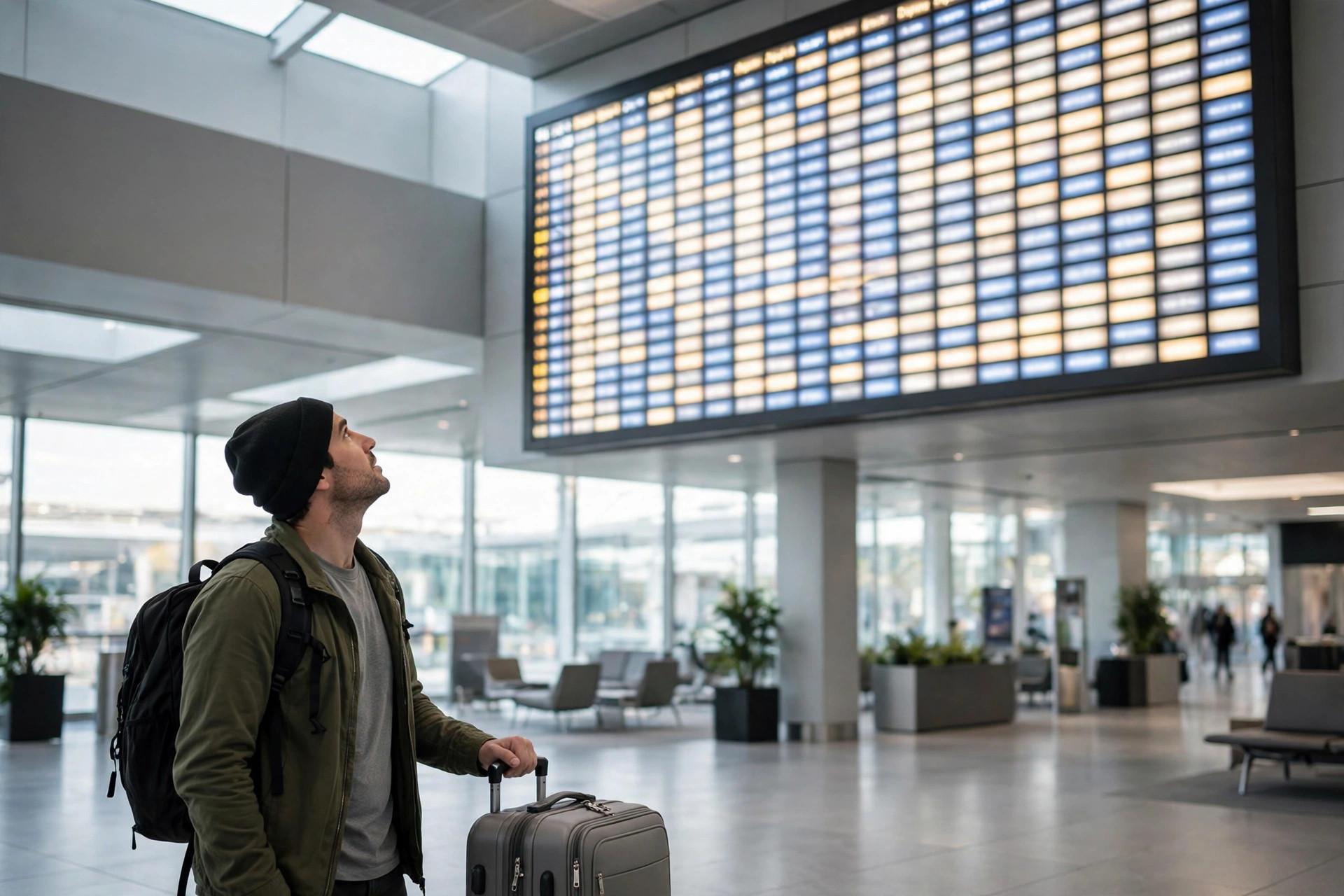
Your first flight touched down 40 minutes late, and your connecting flight is boarding — or already gone — on the other side of the airport. Nobody is telling you what to do.
Take a breath. A missed connection is one of the most routine disruptions in air travel — airlines rebook thousands of passengers a day for exactly this. What happens next depends almost entirely on one thing: whether your flights were booked on a single ticket or as separate tickets. Know which one you’re on, and the next 10 minutes have a clear script.
Sign up for monthly travel guides
The short answer: one ticket or two?
Before anything else, pull up your booking confirmation and answer one question: do both flights share a single booking reference?
- One ticket (single booking reference). The airline is responsible for getting you to your destination. If you miss the connection, they rebook you on the next available flight at no extra cost. Your job is to find airline staff or use the airline’s app to get rebooked — not to buy a new ticket.
- Separate tickets (two booking references). You’re on your own. The second airline has no obligation to rebook, refund, or wait for you — from their point of view, you didn’t show up. You’ll book a new onward flight yourself, and any help comes from travel insurance, not the airline.
And your first response is the same either way — three steps, in order:
- Stay airside if you can. Don’t leave the secure area or collect checked bags unless staff tell you to. Head toward the transfer desk or your airline’s service counter.
- Talk to a person, but work the app too. Join the queue at the desk while you check the airline’s app or chat support — whichever reaches an agent first wins.
- Have your booking reference ready. The six-character code on your confirmation is the key that unlocks rebooking, and the agent’s first question will be for it.
Now the detail behind each step — what to say, what to accept, and what to watch for once you’re talking to the airline.
Your first 10 minutes: the action plan
The window right after a missed connection is when the best options disappear fastest — rebooking seats, hotel rooms, and meal vouchers all go first-come, first-served. Move with purpose, not panic.
1. Don’t leave the terminal. If your connection is in the same terminal, stay put — leaving means re-clearing security and losing time you don’t have. Follow staff instructions if they tell you to collect checked luggage or exit; otherwise, stay airside and head for the transfer desk.
2. Find the right desk. The transfer or connections desk is your fastest route — that’s what it’s built for. If there’s none (common at smaller airports), go to your airline’s gate or service counter. While you queue, open the airline’s app: many carriers let you rebook a missed connection yourself, and the app is often faster than any line.
3. Lead with the booking reference. When you reach an agent — in person, by phone, or in chat — open with it: “My booking reference is X, I missed my connection to [destination], what are my rebooking options?” Agents can see your full itinerary from the reference, so they immediately know whether you’re on a through ticket. This is the difference between a 2-minute interaction and a 20-minute one.
4. Ask for the full menu of options, not just the first one. The first rebooking offer is usually the next flight with an open seat — but not always the only one. Ask: What’s the earliest I can get there? Partner-airline flights that get me in sooner? A different routing? You’re not being difficult; you’re doing the job the agent expects you to do.
5. Ask about care — but ask, don’t demand. If the delay stretches into a meal or an overnight stay, many airlines provide meal or hotel vouchers — but this is discretionary on some carriers and mandated in some jurisdictions, so the honest answer is that it depends. A calm “Is there any assistance with meals or a hotel while I wait?” gets further than an assumption.
6. Document everything. Screenshot your original itinerary, the delay notification, and the rebooking confirmation. Keep receipts for any out-of-pocket meals, transport, or hotels. If you later file a claim — with the airline or with travel insurance — this paper trail is what makes it easy.
7. Don’t buy a new ticket yourself (on a single ticket). The rebooking costs you nothing; a self-bought replacement costs full fare and is hard to get reimbursed. Let the airline do its job first.
Single ticket: the airline’s job is getting you there
Book your whole journey on one ticket and you’ve bought something valuable beyond the flights: a commitment that the airline will get you to your destination, disruptions included.
Rebooking is at no extra cost. When an airline-caused delay makes you miss a connection, the carrier rebooks you on the next available flight — its own or a partner’s — without change fees or fare differences, whatever the cause of the delay.
You may be entitled to care depending on the airline and jurisdiction. Some regions have passenger-rights frameworks that spell out assistance for significant delays — meals, refreshments, or hotel accommodation on an overnight wait — while elsewhere it’s largely the airline’s own policy. We won’t quote specific amounts or thresholds because they genuinely vary, and one universal number would be misleading. Ask the agent what your options are, then check your jurisdiction’s passenger-rights rules against your documented timeline.
Codeshares and alliances work in your favor. On a single ticket that mixes carriers, the airline that caused the misconnection typically handles rebooking, but partner flights may get you there sooner — the agent can often see alliance inventory that you can’t. Ask.
Your checked bag is the airline’s problem. On a through ticket, bags are tagged to your final destination and retagged to your new flight. Don’t go to baggage claim to “find” your bag unless staff explicitly tell you to.
Separate tickets: when you’re your own travel agent
This is the scenario that catches people off guard — often because they didn’t realize they’d created it. Two cheap one-ways from different airlines, or a budget carrier stitched onto a long-haul itinerary, feels like one trip. To the airlines, it’s two unrelated trips that happen to share a passenger.
The second airline owes you nothing. A separate ticket means a separate contract: miss the second flight and that airline sees a no-show — and no-show policies are typically strict, with the fare forfeited and no free rebooking. This holds even when the delay was completely out of your hands.
You’ll likely be buying a new flight at walk-up prices. Last-minute one-ways are among the most expensive tickets in existence. Check whether the missed ticket has any residual value — some fares allow a change fee plus fare difference — but budget for the worst case.
This is exactly what travel insurance is for. Missed-connection coverage exists for this gap: a covered delay on one ticket causes you to miss a separately ticketed onward flight, and the insurance reimburses the replacement cost. The key word is covered — which is the next section’s whole subject.
The prevention takeaway: when the connection matters — an international trip, a tight schedule, a flight you can’t afford to rebuy — book the whole journey on one ticket. The price gap is usually small; the protection gap is enormous.
Sign up for monthly travel guides
Choosing layovers you can actually make
Most missed connections are built at the booking stage. A 45-minute layover looks efficient on the itinerary — until a 20-minute departure delay turns it into a sprint you can’t win. Think in principles rather than magic numbers:
- Domestic connections are more forgiving. Same terminal, no passport control, bags transfer automatically on a through ticket. Shorter layovers are workable, but pad for hub size and season — a sprawling airport in winter is a different proposition than a small regional one in May.
- International connections need real margin. Passport control, possible terminal changes, security re-screening, and longer boarding cutoffs all eat time. Fifty minutes in a foreign hub bets everything goes right — and airports are where things go wrong.
- Terminal changes are the hidden tax. Some airports need a train, bus, or landside transfer between terminals. If your itinerary changes terminals, treat it like a separate journey.
- The last flight of the day is the riskiest connection. Miss it and you’re spending the night — give it the longest layover of the trip.
The tight-connection gamble is one of the classic ways travelers pay more in the end — our practical fare-tracking playbook explains why that “cheap” routing often isn’t.
When travel insurance’s missed-connection benefit applies
Travel insurance can turn a missed connection from a financial hit into an inconvenience — but only when the situation matches what the policy actually covers. The marketing promises; the terms decide.
The benefit is typically triggered by a qualifying delay with a qualifying cause. Missed-connection coverage reimburses extra costs — a replacement flight, meals, a hotel night — when incoming transport is delayed, usually only past a minimum duration and for a covered cause like severe weather or a mechanical issue. A delay from an excluded cause won’t trigger the benefit, however long it lasts.
Policies differ, and the differences are the whole game. Minimum delay thresholds, covered causes, benefit limits, and documentation requirements all vary — there is no standard missed-connection benefit. The only reliable source is the policy wording itself: read the missed-connection or travel-delay section before you buy, not after you need it.
Timing matters. Coverage must be purchased before the disruption is known — you can’t insure a storm that’s already delayed your flight. Traveling in a volatile season? Think about this at booking, not at the gate. Our explainer on how weather disruptions interact with travel insurance covers the weather angle in more depth.
Disclosure: TripBuddy may earn a commission when you book through links on this page — at no extra cost to you.
If a missed connection is the scenario that worries you most — separate tickets, tight layovers, storm-season travel — consider travel insurance that covers missed connections and compare policies with the benefit terms side by side before your trip.
Still at the gate with a missed connection? Start with the three steps at the top of this article, keep your booking reference handy, and let the airline rebook you before spending a dollar. Before the next trip, get the backup in place: the cheapest insurance against a missed connection is a single ticket with a sane layover — and for the rest, there’s travel insurance that covers missed connections.
Last reviewed: October 5, 2026