
TripBuddy Guide
Paris rewards the well-placed. It’s not a huge city — you can cross the center on foot in an afternoon — but the difference between a great base and a tiring one is real. The wrong area means a metro transfer every time you go out, a room above a tour-group restaurant street, or a “charming Montmartre garret” that’s a fifteen-minute uphill walk from the nearest station.
The honest part first: none of the six areas below is a bad choice. But each has a trade-off no listing photo shows you — price versus location, walking versus the metro, genuine bistros versus tour-bus streets. Pick by trip style, not by how the arrondissement sounds.
Sign up for monthly travel guides
The short answer: match the area to your trip
- Le Marais — style and walkability. Best: atmospheric streets, great food, walkable to half the sights; worst: prices run high, and weekends bring crowds.
- Saint-Germain-des-Prés — the classic Left Bank. Best: café culture, elegant and central; worst: you’re paying a premium for the address.
- The Latin Quarter — students, books, and energy. Best: lively, good value for the center; worst: the tourist-trap dining streets and noise on the main drags.
- Montmartre — village charm above the city. Best: atmosphere and views you can’t get anywhere else; worst: the climb, and the crush around Sacré-Cœur.
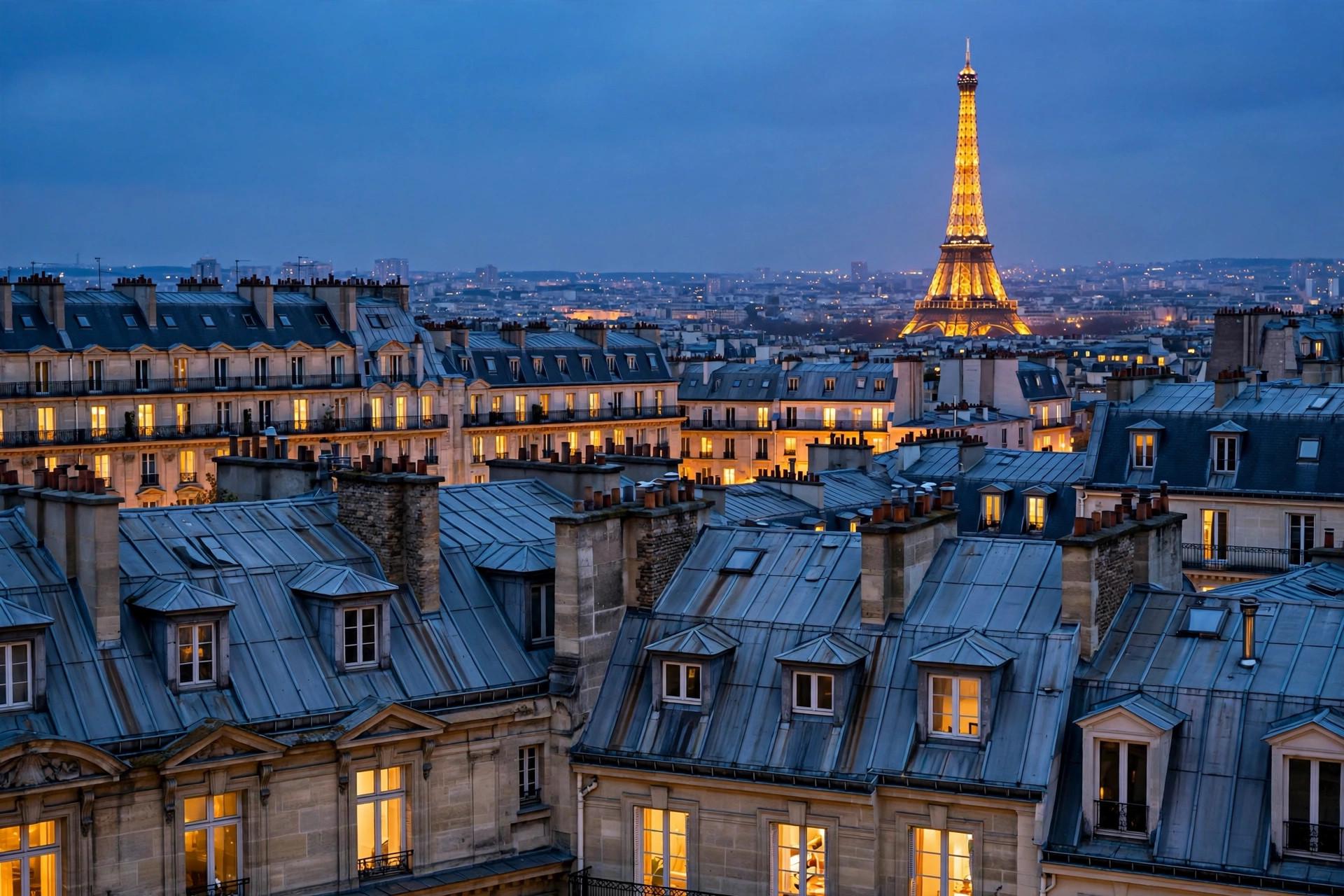
- The 7th arrondissement — the Eiffel Tower at your doorstep. Best: quiet, elegant, landmark views; worst: expensive, thin nightlife, and far from the evening action.
- Bastille / Oberkampf — nightlife and value. Best: local bars, better prices, real Parisian evenings; worst: edgier streets, less postcard Paris.
Read the trade-offs below before you commit — the right base for a romantic weekend is the wrong one for a museum-marathon week.
Le Marais: the walkable sweet spot, at a price
Straddling the 3rd and 4th arrondissements, the Marais is the neighborhood most travelers picture when they picture Paris: medieval streets, old mansions turned museums, the Place des Vosges, and a density of good restaurants.
The access is genuinely excellent. You’re walkable to Notre-Dame, the islands, the Louvre, and the Bastille side — and several metro lines cross the district, so the rest of the city is one direct ride away.
The catch is the price tag and the popularity. The Marais is one of the most expensive districts to sleep in, and you’re paying for the address as much as the room — a similar-quality hotel costs meaningfully less two arrondissements over. Check reviews for room size, too: the charming old buildings hide some genuinely tiny rooms.
Verdict: pick the Marais if walk-everywhere convenience and atmosphere are worth paying for. Compare carefully — the location premium is real.
Saint-Germain-des-Prés: the postcard Left Bank
Saint-Germain is the Left Bank at its most polished: famous café terraces, art galleries, and streets that have been fashionable for about four hundred years.
This is the elegant central base. You’re close to the Louvre and the islands by bridge, the Latin Quarter is next door, and the metro connections are strong. Step off the famous terraces and the side streets hold some of the city’s best bistros.
The catch is that you’re paying for the dream. Saint-Germain commands some of the highest room rates in the city, and the famous café terraces charge accordingly — a coffee with a view of the boulevard costs what lunch costs elsewhere. The area is beautiful but not exactly local; it can feel like a very expensive stage set. And the nightlife is refined rather than lively — this is wine bars and jazz clubs, not late-night streets.
Verdict: pick Saint-Germain for a classic, romantic Paris trip where the budget has room. Skip the famous terraces for your wallet’s sake; eat one street over.
The Latin Quarter: lively, student-priced, and patchy
The Latin Quarter runs from the Sorbonne to the Panthéon — bookshops, student cafés, and streets that have been young for eight centuries. It’s energetic, relatively good value for the center, and well placed for the Left Bank sights and the islands.
It’s one of the more affordable central areas, with excellent metro coverage and student energy that keeps the streets lively.
The catch is the patchiness. Streets like the rue de la Huchette and the lanes off Place Saint-Michel are the textbook definition of tourist-trap dining — multilingual touts, laminated photo menus, food priced for people who won’t be back. The main drags get noisy late, and some blocks feel more souvenir-shop than neighborhood. Eat and drink on the side streets; treat the main drags as scenery to walk through, not places to sit down.
Verdict: pick the Latin Quarter for central, good-value Paris — but book off the main tourist streets and eat where the menus are in French first.
Montmartre: the village on the hill, with the hill included
Montmartre still feels like a village Paris annexed: cobbled lanes, artists’ studios, and Sacré-Cœur glowing white above it all. The views over the city are unmatched, and the atmosphere is romantic in a way the center can’t quite copy.
The access trade-off is the honest one. Montmartre sits in the north, and while the metro gets you everywhere, you’re starting every journey with a ride — this is not a walk-to-the-Louvre base. The climb from the Abbesses metro to Sacré-Cœur is a workout, and a room “near the basilica” can mean a steep haul with luggage. The streets immediately around Sacré-Cœur and Place du Tertre are among the most tourist-saturated in Paris — charming at 8 a.m., a crush by noon.
After dark, the base of the hill toward Barbès and parts of Pigalle gets edgier — know your exact block. And the famous “village” restaurants on Place du Tertre charge for the view, not the food.
Verdict: pick Montmartre for atmosphere and views, and accept the metro commute as the price. Book on the quiet side streets, not on the tourist drag.
Sign up for monthly travel guides
The 7th arrondissement: the Tower, the quiet, and the distance
The 7th is Paris at its most elegant and residential: the Eiffel Tower, the Champ de Mars, the Musée d’Orsay, and quiet Haussmann streets. If your dream is waking up to the Tower from your window, this is where that happens.
The upside is calm and class. The streets are quiet and beautiful, and the big sights — the Tower, Invalides, Orsay — are genuinely at your doorstep.
The catch is everything else. The 7th is expensive, dining is thin and formal, and nightlife is essentially nonexistent. You’re on the western edge of the center, so Marais, Bastille, and Oberkampf evenings all start with a metro ride. If your trip is monument days and early nights, that’s fine. If it’s dinners and drinks, you’ll feel the distance.
Verdict: pick the 7th for a landmark-focused, quiet, upscale trip. Not the base for a nightlife or food-crawl Paris.
Bastille / Oberkampf: where Paris actually goes out
East of the Marais, Bastille and Oberkampf are where the city’s evening energy lives: wine bars, cocktail spots, and live-music venues.
Rooms cost meaningfully less than in the Marais or Saint-Germain, bars and restaurants are priced for locals, and the evenings need no planning.
The catch is the polish — or lack of it. The streets around Bastille can feel gritty, especially late at night, and parts of Oberkampf are more “real neighborhood” than beautiful. You won’t get Haussmann grandeur or river views here; you’ll get a great night out and a reasonable bill. Light sleepers should avoid rooms on the bar streets, because the same energy that makes it fun makes it loud.
Verdict: pick Bastille/Oberkampf for nightlife, value, and a local-feeling Paris. Skip it if the trip is about classic Paris scenery.
The Paris-specific catches nobody puts in the listing
Three things to check before you book anywhere in this city:
Stay near a station on a direct line. Paris is a metro city, and “ten minutes from the metro” is not the same as “well connected.” Look at which line your nearest station serves and whether it reaches your main sights without a transfer — lines 1, 4, and 14 cover most of the tourist map. A room near a minor station with two transfers to everything will cost you an hour a day.
The tourist-trap dining streets are specific and avoidable. Rue de la Huchette, the lanes off Place Saint-Michel, the streets around the base of Sacré-Cœur — the pattern is the same everywhere: touts outside, photo menus in six languages, prices for a view rather than a meal. The fix is simple: walk one or two streets sideways. Paris is full of good bistros; they’re just rarely on the street with the view.
You’re often paying for the arrondissement, not the room. A three-star in the Marais can cost what a four-star costs in the 11th or 12th. Decide what the location is worth to you in actual saved transit time, then compare room quality at equal prices across districts. And read recent reviews for two words: “noise” (bar streets and ground floors) and “size” (charming old buildings, genuinely small rooms).
Many older Parisian buildings have no elevator, or a famously tiny one — confirm the floor and the lift before you book.
Putting it together
Walk-everywhere first visit? Le Marais — pay the premium, save the transit time. Romantic classic Paris? Saint-Germain — budget for it. Central on a budget? The Latin Quarter — off the main drags. Atmosphere and views? Montmartre — accept the commute. Landmarks and quiet luxury? The 7th — accept the distance from the evenings. Nights out and real value? Bastille/Oberkampf.
Once you’ve narrowed it to an area, our guide to comparing hotel prices will help you read the rate the way hotels price it — what’s included, what’s not, and which “deal” is actually cheaper. And if you like this trip-style approach to picking a base, our breakdown of where to stay in Barcelona matches neighborhoods to travelers the same way.
TripBuddy may earn a commission when you book through links on this page, at no extra cost to you.
Once you’ve picked your neighborhood, explore hotel options on TripBuddy and find a stay that fits your trip style.
Want one practical, money-saving travel guide like this each week? Join the TripBuddy newsletter and get the next one first.
Last reviewed: September 14, 2026