
TripBuddy Guide
Where to Stay in Milan: Best Areas for a Short Visit
For a short visit to Milan, where you stay matters more than which hotel you pick. Choose the wrong neighborhood and you’ll spend the trip on trams, watching the city slide past the windows. Choose the right one and Milan comes to you — the sights on foot, dinner a stroll away, the evening’s aperitivo practically outside your door.
This guide won’t recommend specific hotels. Instead, it matches Milan’s best areas to short-visit styles, with the trade-offs stated plainly — because every neighborhood in this city is a deal with the devil, and you should know what you’re trading.
Sign up for monthly travel guides
The short answer: match the area to your trip style
- Centro / Duomo — first-timers who want everything walkable. Maximum convenience, maximum price, maximum tourists.
- Brera — the charming compromise. Atmospheric, walkable, quieter nights. Boutique prices, but worth it for a short stay.
- Navigli — come for the aperitivo energy. Lively canals, younger crowd, genuinely fun — and genuinely noisy at night.
- Porta Nuova / Garibaldi — the transport-hub play. Modern, business-district feel, superb metro connections. Less charm, very practical.
- Isola — the local’s pick. Good food scene, residential calm, better value. A bit of a ride to the center.
The decision rule for short visits: optimize for walkability and metro access over room size or price. You’ll spend almost no time in the room and a great deal of time moving. A smaller room in Brera beats a suite forty minutes out, every time.
Centro / Duomo: maximum walkability, maximum price
Staying near the Duomo puts the cathedral, the Galleria Vittorio Emanuele II, La Scala, and the Montenapoleone shopping streets all within walking distance. For a first-timer with three days, nothing beats stepping out of your hotel and already being there — no transit math, no timetable, just walking.
The trade-offs are real. This is the priciest part of the city, and the dining immediately around the piazza skews heavily tourist-trap — the fix is easy (walk two streets in any direction and the quality doubles), but it’s a fix you have to remember to apply. The square itself stays busy late, so if you’re a light sleeper, ask for a room on a side street or a higher floor rather than facing the piazza.
Best for: first-timers, short stays, anyone who wants to minimize transit thinking. If this is your only trip to Milan, the convenience premium is usually worth paying.
Brera: the charming compromise
Brera is Milan’s old artists’ quarter — cobblestone streets, galleries, café terraces — and for a short visit it’s arguably the sweet spot. It’s a 15- to 20-minute walk to the Duomo, a short hop to the Last Supper at Santa Maria delle Grazie, and it quiets down at night in a way the Navigli doesn’t. The neighborhood itself is an attraction: you’ll enjoy simply walking home.
The catch is price. Brera runs boutique — smaller hotels, characterful rooms, and rates that reflect the desirability. For a two- or three-night stay, our judgment is that the premium buys the single most pleasant version of Milan. For longer stays, the math gets harder to justify.
Best for: couples, design-minded travelers, first-timers who want atmosphere without the Duomo-area crowds.
Navigli: come for the aperitivo, pack earplugs
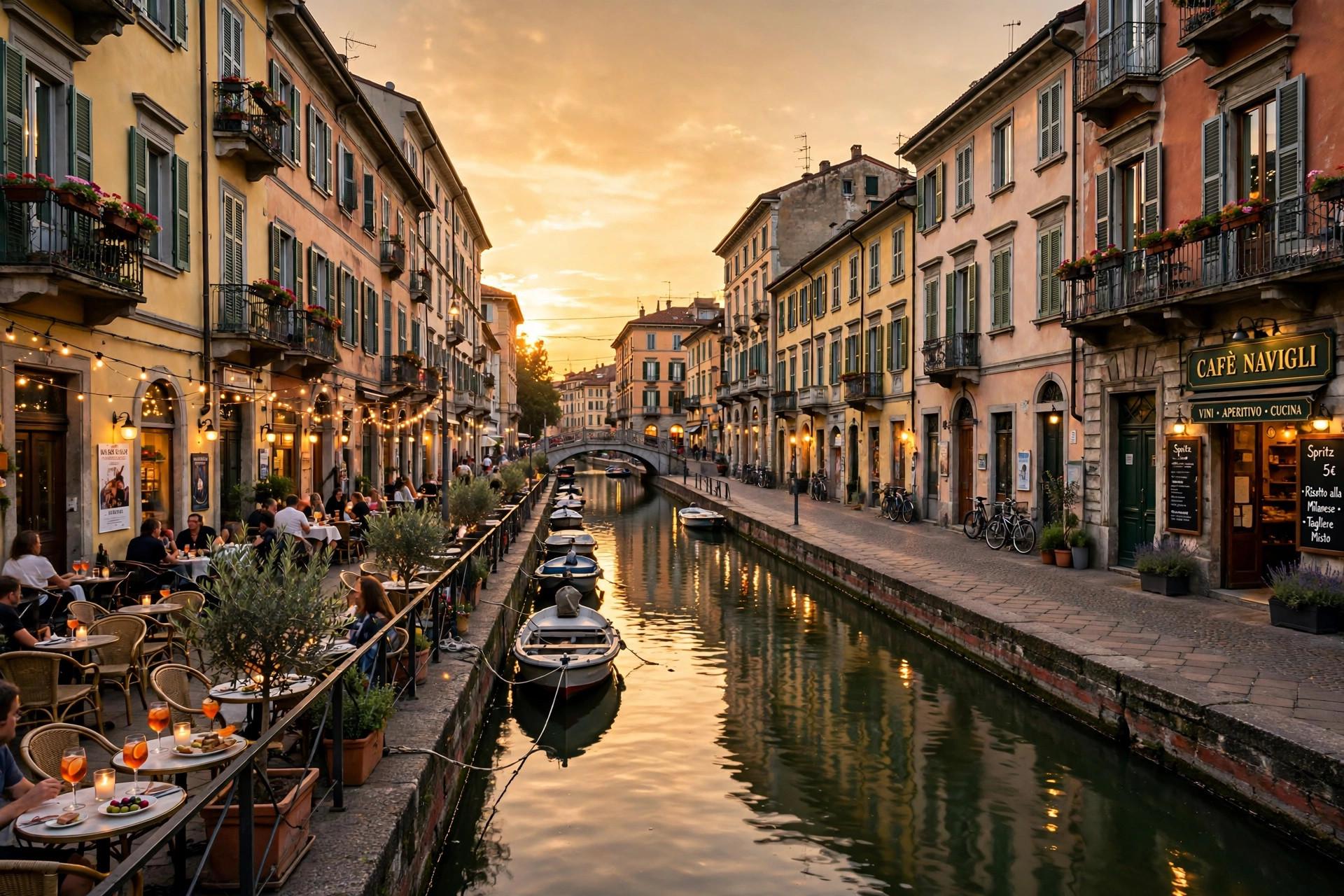
The Navigli canals are Milan’s evening playground — the aperitivo ritual was practically invented along these waterways, and on a warm night there’s nowhere better to be. The crowd skews younger, the bars stay lively late, and the whole district has an energy the historic center can’t match after dark.
The noise is the genuine trade-off, not a footnote. Canal-side streets on weekend nights are loud — this is a nightlife district, and it behaves like one. If you stay here, ask specifically for a room away from the canal side or on an upper floor; it makes a real difference. The district also sits slightly south of the center, though tram and metro connections are good enough that you won’t feel stranded.
Best for: night owls, social travelers, anyone whose trip revolves around evenings out. Light sleepers should pick Brera instead and visit the Navigli for the evening.
Sign up for monthly travel guides
Porta Nuova / Garibaldi: the transport-hub play
Porta Nuova is Milan’s gleaming modern district — skyscrapers, the Piazza Gae Aulenti, and the Garibaldi and Centrale stations within easy reach. It has less historic charm than anywhere else on this list, and nobody is writing poetry about it. What it has is logistics: multiple metro lines converge here, and if you’re day-tripping to Lake Como or catching an early train, station proximity is worth more than cobblestones.
This is also where the value tends to be better than the Centro — modern business-style hotels, competitive rates, and you’re still only a few metro stops from the Duomo. The honest framing: you’re trading atmosphere for practicality, and on a trip with tight train connections, practicality wins.
Best for: travelers with early departures or day trips planned, business-trip extenders, anyone who values metro access above all else.
Isola: the local’s pick
Just north of Garibaldi, Isola is where the guidebooks thin out and the neighborhood gets real — a strong local food scene, residential streets, and a noticeably calmer pace. Accommodation here tends to be better value than the center, and the area has its own evening life that doesn’t depend on tourists.
The trade-off is distance. You’re looking at a 20-plus-minute walk or a metro ride to reach the Duomo area, which matters more on a three-day trip than a week-long one. Isola rewards travelers who are comfortable navigating the metro and who want to feel like they’re staying in Milan rather than visiting it.
Best for: repeat visitors, longer stays, food-focused travelers, anyone who’s been to the Duomo already and wants the other Milan.
What not to do
Three common mistakes, all avoidable:
- Staying near Malpensa “to be close to the airport.” Malpensa is roughly 50 kilometers from the city. An airport hotel saves you one morning’s commute and costs you the entire trip’s evenings — every dinner becomes a train ride. Stay in the city; leave early on departure day.
- Booking on price alone in a poorly connected area. A cheap room with bad metro access is the most expensive mistake on this list, because you’ll pay for it in taxi fares and lost hours. Before booking anywhere unfamiliar, check the nearest metro station and count the stops to the Duomo.
- Assuming “Milan is small, so anywhere works.” The historic center is compact and walkable; the outskirts are not. The city sprawls, and the difference between a 10-minute walk and a 35-minute commute is the difference between a relaxed trip and a tired one.
Once you’ve picked your area, the next step is comparing actual listings within it — room quality varies enormously even on the same street. Our guide to comparing hotel prices walks through how to read listings so the price you see is the price you get.
Planning a multi-city trip? Our where-to-stay guide for Barcelona uses the same area-first approach for picking a neighborhood there.
TripBuddy may earn a commission when you book through links on this page, at no extra cost to you.
Pick the area that matches how you travel — walkability for first-timers, atmosphere for romantics, nightlife for night owls, logistics for train-hoppers — then compare hotel options on TripBuddy and explore what’s available in your chosen neighborhood.
Want one practical, money-saving travel guide like this each week? Join the TripBuddy newsletter and get the next one first.
Last reviewed: September 14, 2026