
TripBuddy Guide
It happens like this: you're scrolling hotel results late at night, and there it is — a gorgeous property at half the price of everything else nearby. Infinity pool glowing at dusk. A suite-sized room with a view. A rate that makes you wonder if you misread it. Your finger hovers over the Book button, and a small voice asks: what's the catch?
Sometimes there is no catch — off-season pricing, new properties building reviews, and genuine flash sales are all real. But sometimes the "deal" is a framing trick: a wide-angle lens, a fee buried three clicks deep, or a review score propped up by a burst of five-star praise. You can learn to tell the difference in about ten minutes, with checks that cost nothing — here's how to read a listing like a skeptic.
Sign up for monthly travel guides
The short answer: the 5 checks that catch most misleading deals
- Photos: compare the photo set across two or three platforms, plus traveler-uploaded photos. Wide-angle lenses, missing bathroom shots, and "artist's impression" captions are the classic tells.
- Reviews: the most honest signal lives in the 2–4 star reviews. Watch for clusters of five-star one-liners posted within days of each other, or identical phrasing across "different" reviewers.
- Rates: always verify the all-in total for your exact dates and occupancy. Per-night vs. per-stay displays, pre-fee prices, currency conversions, and non-refundable defaults are where "deals" are manufactured.
- Amenities: "available" doesn't mean free, and "on-site" doesn't mean open. Confirm the pool, Wi-Fi, breakfast, and parking terms that matter to your trip.
- Location: drop the address into a map yourself. "Near the beach" and "city center" are marketing terms until you verify the walk.
Start with the photos: your best lie detector
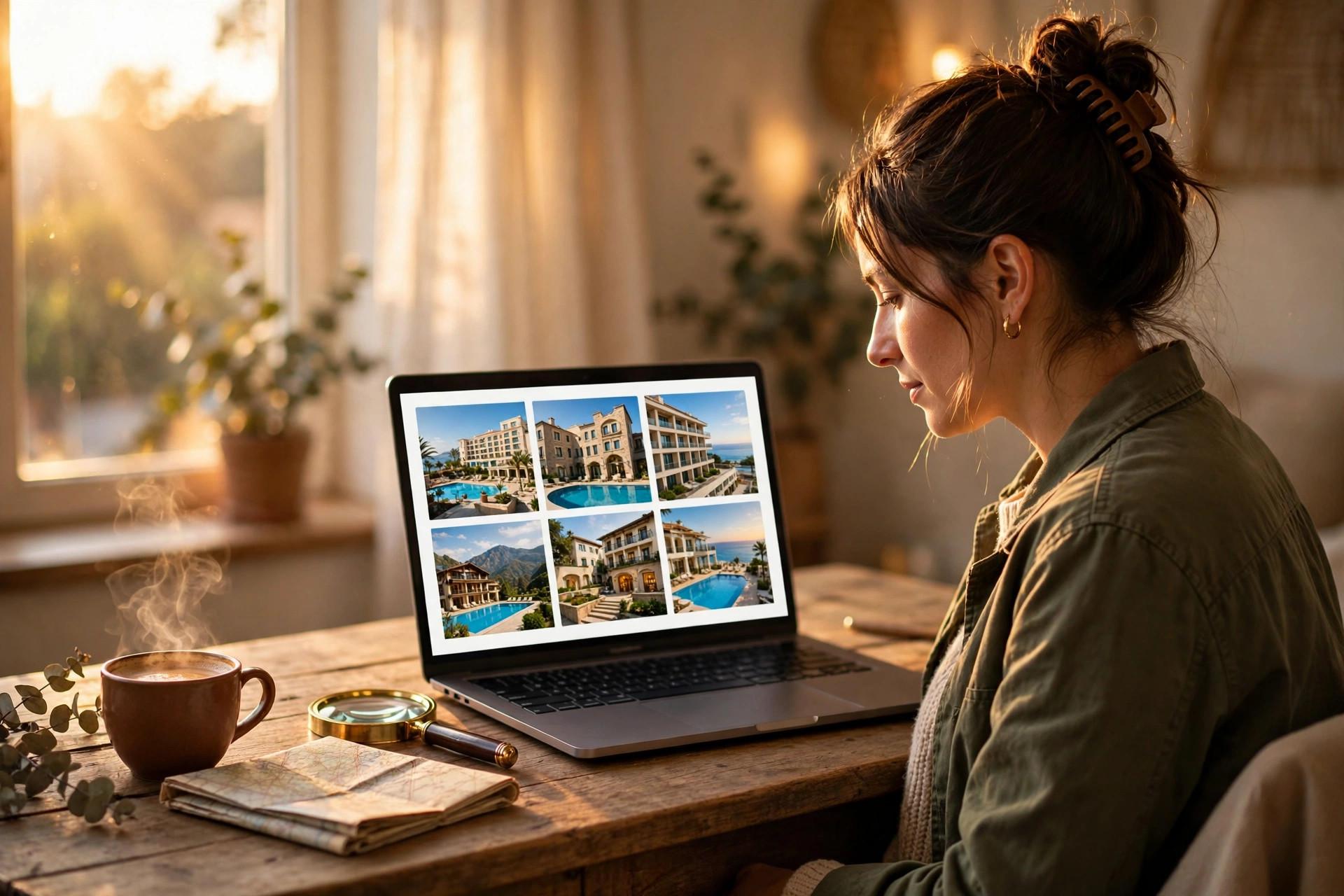
Hotel photography is advertising — allowed to show the property at its absolute best. Compare the photo set across two or three platforms (the hotel's site plus a booking site or two). Confident properties show the same rooms everywhere; barely overlapping sets deserve a raised eyebrow.
Then check traveler-uploaded photos — the unfiltered version: same rooms, no staging, real lighting. If they look like a different hotel than the listing shots, believe the guests. Specific tells to watch for:
- No bathroom or exterior photos. Listings show what they're proud of — a missing bathroom usually means a dated or tiny one.
- Rooms where the bed fills the frame. Ultra-wide-angle lenses make small rooms look palatial; check proportions against doorways and windows.
- Seasonal mismatch. Snow on the ground in a listing you're viewing for July means old photos — or borrowed from the property's best season.
- "Artist's impression" or "for illustrative purposes." That's the listing admitting, in fine print, the photo isn't the actual room.
Read the reviews like a detective, not a fan
The score alone is the least informative part. A 9.1 built on detailed, recent reviews means something different from one built on forty five-star one-liners posted in the same month.
Start with the 2–4 star reviews — the most honest signal. These travelers liked the place enough not to trash it but were specific about trade-offs: thin walls, a 15-minute walk to the metro, a breakfast that isn't worth it. A complaint that repeats across months is a feature of the property, not a bad day.
Then scan for manipulation patterns:
- Review bursts — a flood of five-star one-liners within days is the classic signature of incentivized or fabricated reviews.
- Identical phrasing across "different" reviewers.
- A score split across platforms — 9+ on one site, barely 7 on another. Read the lower one first.
- Nothing recent — no reviews in months can mean a management change or a bad renovation.
Management responses matter too: thoughtful replies suggest a property that takes feedback seriously; defensive boilerplate tells you how complaints get handled. Where you book matters here as well — our guide to booking direct vs. third-party explains why some platforms only publish reviews from verified stays.
Sign up for monthly travel guides
The rate tricks that manufacture "deals"
The too-good-to-be-true rate is usually born in the arithmetic, not the room:
- Per-night vs. per-stay display. A tempting nightly rate shown for one night of a five-night search, or a total covering fewer nights than you selected. Re-check dates and night count at the final step.
- Price-before-fees. Resort and amenity fees, city taxes, and "service charges" added after the headline price can turn a deal into the priciest option on your shortlist. Compare all-in totals — our resort fee guide shows exactly how to find them before you book.
- Currency sleight of hand. Home-currency prices are estimates; you're charged in local currency at the day's rate, plus any card foreign-transaction fee.
- The non-refundable default. The cheapest rate shown is often prepaid and non-refundable — a fair trade when plans are firm, but make sure you're choosing it deliberately.
- Manufactured urgency. "Only 1 room left!" is sometimes true, sometimes theater. If pressure is deciding for you, check the same hotel on another platform and compare calmly.
Bait amenities: the fine print that changes the stay
Amenity lists are written by marketers who choose their verbs carefully:
- "Wi-Fi available" ≠ free Wi-Fi. It can mean paid access, lobby-only coverage, or a per-device fee.
- "Pool on-site" ≠ pool open. Renovation notices and seasonal closures hide at the bottom of the page, below the glowing pool photo.
- "Beach access" ≠ private beach. It can mean steps onto the sand — or a shuttle to a public beach with rented chairs.
- "Breakfast included" — for whom? Some rates cover one guest, or only certain room types.
- "Parking available" — at what price? In many cities it's steep, and never in the headline rate.
The rule: if an amenity is why you're booking the hotel, confirm it in writing before you commit.
Cross-check the address on a map
Location claims are the easiest to verify and the most commonly stretched. Drop the address into a map and check three things: real walking distance to the places you care about, the transit situation (is the "airport hotel" 40 minutes from the airport?), and the neighborhood — street view tells you what the listing won't.
The 5-minute pre-booking checklist
- Compare photo sets on two platforms, and glance at traveler-uploaded photos.
- Skim the 2–4 star reviews for complaints that repeat.
- Click through to the final all-in total for your exact dates and occupancy.
- Confirm — in writing — the one or two amenities that sold you on the place.
- Map the address and check the real distance to what matters.
Five minutes, five checks. If the deal survives scrutiny, book with confidence — if not, you've avoided the worst kind of travel surprise: the one you pay for in advance.
TripBuddy may earn a commission when you book through links on this page, at no extra cost to you.
Found a rate that looks too good? Book a free chat with a TripBuddy travel advisor — we'll sanity-check the listing, the fees, and the fine print with you. Still shortlisting? Start from our hotel guides to compare neighborhoods and booking strategies first.
Last reviewed: October 12, 2026