
TripBuddy Guide
On a map, Tbilisi looks easy. It’s compact — you can cross the historic center on foot in under an hour — so almost every hotel listing calls itself “central.” In practice, the city is built on steep hills above a river gorge, and “central” can mean a flat stroll to dinner or a 200-step climb home on cobblestones. Where you sleep shapes the trip more than the hotel itself: what you walk to after dinner, how loud your nights are, and whether sightseeing starts with a taxi or a doorstep.
The honest part first: none of the five neighborhoods below is a bad choice. But each has a trade-off that no listing photo will show you. Pick by trip style, not by star rating.
Sign up for monthly travel guides
The short answer: match the neighborhood to your trip
- Old Town / Abanotubani — first visit, short stay, walk-everywhere energy. Best access to sights and restaurants; worst noise, steepest stairs, most tourist-priced menus.
- Sololaki — charm without the chaos. Beautiful 19th-century streets, quieter nights, still a short walk to the center; fewer hotel options, and the streets climb too.
- Vera / Vake — the live-like-a-local pick. Leafy, residential, good bakeries and parks; Vera is genuinely uphill, Vake is a ride away from the sights. Best for longer stays.
- Marjanishvili / Agmashenebeli — lively and budget-friendly. Pedestrian bar-and-café street, good metro links, local prices; edgier around the edges and less historic charm.
- Avlabari — views and value across the river. Cheaper stays, calmer nights, Sameba Cathedral on the skyline; a bridge or metro ride from the action.
Read the trade-offs below before you commit — the right area for a nightlife-heavy weekend is the wrong area for a quiet week.
Old Town and Abanotubani: the postcard, with the noise to match
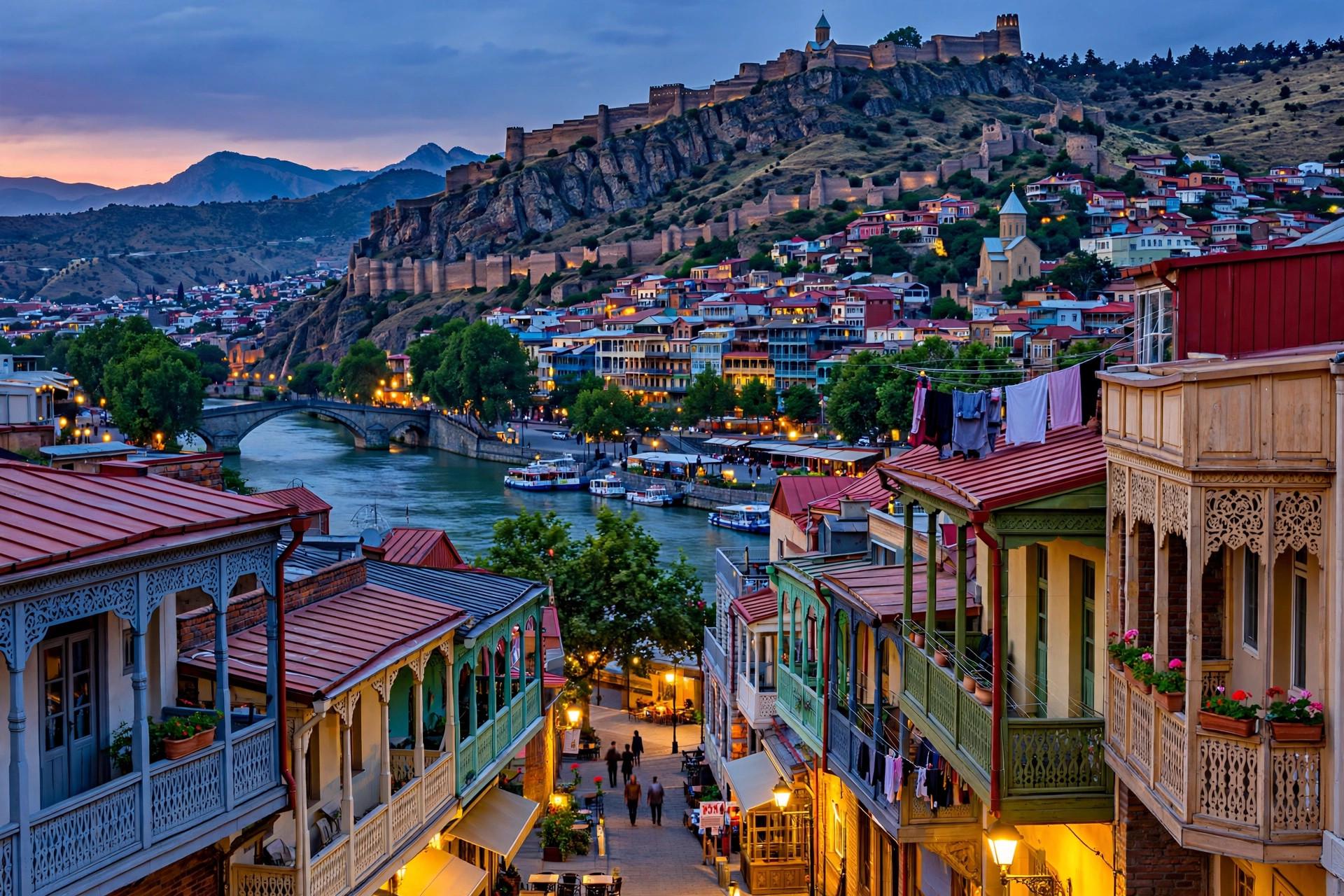
This is the Tbilisi of the postcards: the domed sulphur baths of Abanotubani, the carved wooden balconies leaning over narrow lanes, Narikala Fortress glowing above at night, and the Shardeni bar quarter spilling onto the streets below. If you have two or three days and want to see everything on foot, this is the defensible default.
The access is genuinely unmatched. Most of the headline sights — the baths, Narikala, the Bridge of Peace, Freedom Square — are within walking distance, and the restaurant density is the highest in the city. You can do dinner, a nightcap, and a midnight walk to the river without thinking about transport once.
The catch is that everyone else had the same idea. The streets around Shardeni and Erekle II stay loud late — bar music, not traffic — and rooms facing the street can be a problem for light sleepers even on weeknights. Menus on the main drags run tourist-priced, so the “great restaurant next door” is often the one you should walk five minutes past. And this is the hilliest part of the city: some guesthouses sit up lanes that cars can’t reach, which means dragging luggage up cobbled steps on arrival. Ask your host about the approach, not just the address.
Verdict: pick Old Town if maximizing on-foot sightseeing matters most and you can sleep through (or join) the nightlife. Bring earplugs; request a courtyard-facing room.
Sololaki: old Tbilisi without the crowds
Sololaki sits just above Freedom Square — a grid of 19th-century streets lined with art-nouveau facades, carved balconies, and corner bakeries, where the city feels residential rather than performative. It’s a ten-minute walk downhill to the old town sights and the metro, but the evenings belong to locals.
The trade-off is inventory. There are fewer hotels here — more small guesthouses and apartments — so book earlier than you would in the Old Town, especially in peak season. Dinner options thin out after 10 p.m. compared to Shardeni, and yes, Sololaki climbs too: the walk home from Freedom Square is uphill all the way. But for travelers who want atmosphere without the bar-street soundtrack, it’s the sweet spot.
Vera and Vake: leafy, local, and a little uphill
West of the center, Vera and Vake are where Tbilisi lives its daily life: tree-lined streets, neighborhood bakeries, parks, and some of the city’s best-regarded local restaurants — the kind with no English menu and no view, just good food. Vake is the more upscale of the two; Vera has a village feel despite being close to everything.
This is the best choice for a longer stay. Apartments are common, grocery shops are real (not tourist minimarts), and you’ll pay local prices without trying. The catch is distance and elevation. Vera is built on a serious slope — check the map elevation before you fall in love with a listing — and Vake, while flat, is a metro or bus ride from the old town rather than a walk. Fine for a week, slightly detached for a three-day sprint.
Sign up for monthly travel guides
Marjanishvili and Agmashenebeli: the lively, budget-friendly pick
On the left bank of the river, Aghmashenebeli Avenue is Tbilisi’s other great pedestrian street: cafés, wine bars, and restaurants in renovated historic buildings, with a younger, more local crowd than Shardeni. The Marjanishvili metro station gives you fast links across the city, and accommodation here is typically the best value of any central area.
The honest caveat: the streets around the station edges can feel gritty after dark, and parts of the area are more “lived-in” than beautiful — that’s the trade for the prices. Some stretches of Aghmashenebeli itself get noisy on weekend nights, so the courtyard-room advice applies here too. If historic atmosphere is the main thing you’re buying, Sololaki or the Old Town deliver more of it.
Avlabari: views and value across the river
East of the Mtkvari, Avlabari looks back across the river at the old town — which means some of the best views in the city come from the cheapest rooms in it. The hilltop Sameba Cathedral dominates the skyline, the streets are calmer, and prices run noticeably lower than across the water.
The catch is the river itself. You’re a bridge crossing or a metro stop away from the evening action, which is fine — until it’s midnight and you’d rather be five minutes from your door. Nightlife options in Avlabari are thin, so this suits travelers who treat the hotel as a place to sleep, not a base for going out. Light sleepers and budget hunters: this is your area.
The Tbilisi-specific catches nobody puts in the listing
Three things to check before you book anywhere in this city:
Hills are a feature, not a footnote. “Five minutes from the old town” can mean five minutes downhill and fifteen back up. Open the listing on a map, switch to terrain or street view, and look at the actual approach. If anyone in your group has mobility issues, favor the flatter ground near Freedom Square, Rustaveli Avenue, or the Marjanishvili side — and confirm the building has a working elevator, because many older ones don’t.
Noise is the real room lottery. Bar streets (Shardeni, Erekle II, Aghmashenebeli) are the problem, not traffic. When booking, request a courtyard-facing room — and read recent reviews for the word “noise” before you commit. A beautiful balcony on a bar street is a beautiful balcony you can’t sleep behind.
Late arrivals need a plan. If you land after midnight, confirm late check-in with your host directly — small guesthouses sometimes lock up. Agree on how you’ll reach the property before you fly: a ride-hailing app or a pre-arranged pickup beats negotiating at the curb at 2 a.m.
And a winter note: Tbilisi’s charming old buildings can be drafty, and heating quality varies. If you’re visiting in winter, recent reviews mentioning warmth (or the lack of it) are worth more than the star rating.
Putting it together
Two or three days and a first visit? Old Town — accept the noise, gain the city. Food and nightlife as the main event? Marjanishvili, or the Old Town if the budget stretches. A week of slow mornings and local bakeries? Vera or Vake. Charm without the chaos? Sololaki. Best views for the money and early nights? Avlabari.
Once you’ve narrowed it to an area, our guide to comparing hotel prices will help you read the rate the way hotels price it — what’s included, what’s not, and which “deal” is actually cheaper. And if you like this trip-style approach to picking a base, our breakdown of where to stay in Barcelona matches neighborhoods to travelers the same way.
TripBuddy may earn a commission when you book through links on this page, at no extra cost to you.
Once you’ve picked your neighborhood, explore hotel options on TripBuddy and find a stay that fits your trip style.
Want one practical, money-saving travel guide like this each week? Join the TripBuddy newsletter and get the next one first.
Last reviewed: September 14, 2026