
TripBuddy Guide
Rome is a city of distances. The Colosseum, the Vatican, and the Pantheon look close together on a map, but they sit in different districts, and the metro only goes so far — two main lines means your hotel’s bus and tram links matter more than they would anywhere else. Where you sleep decides how much of your trip is spent walking between wonders and how much is spent waiting on a platform.
The honest part first: no neighborhood below is a bad choice, and every one of them puts you somewhere worth being. But each has a trade-off the listing photos won’t show you — noise, distance, crowds, or a rough edge around the station. Pick by trip style, not by star rating.
Sign up for monthly travel guides
The short answer: match the neighborhood to your trip
- Monti — the bohemian base near the ancient sights. Best: walk to the Colosseum and the Forum, hip little wine bars; worst: noise on the main drag, uphill lanes.
- Trastevere — evenings, atmosphere, aperitivo. Best: the prettiest cobblestones in Rome and a buzzing night scene; worst: nightlife noise, a walk to the daytime sights.
- Centro Storico (Pantheon / Piazza Navona) — the postcard center. Best: walk everywhere, Rome’s greatest hits on foot; worst: higher rates, crowds all day, noise at night.
- Termini / Esquilino — the transit and value pick. Best: the station hub connects everywhere, and rates drop near the edges; worst: the roughest edges in central Rome — pick your street carefully.
- Prati — the Vatican base. Best: elegant, calm, residential; worst: quieter nights and a longer ride to the ancient sights.
- Jewish Ghetto — small, central, and historic. Best: genuinely local dining and a central location; worst: higher rates for a tiny area, and some streets go quiet early.
Read the trade-offs before you commit — the right base for a nightlife trip is the wrong one for early Vatican mornings.
Monti: bohemian, and closest to the ancient stuff
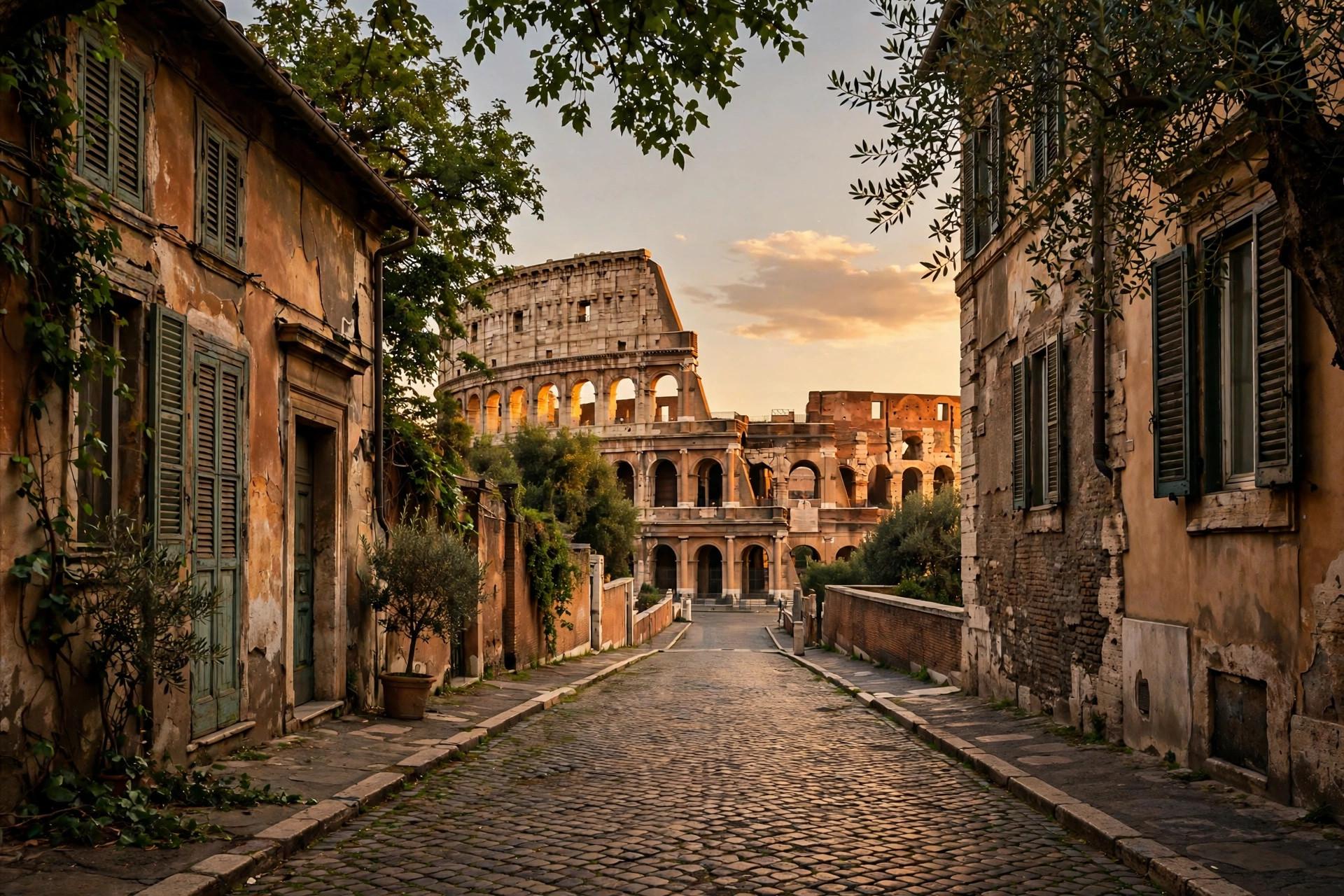
Just uphill from the Colosseum, Monti is Rome’s arty quarter: ivy-draped lanes, vintage shops, and some of the city’s most interesting wine bars and small restaurants. Via Urbana is the main drag, lined with places that feel discovered rather than tourist-assembled. If the ancient sights are the reason for your trip, this is the defensible default.
The access is real. You can watch the Colosseum light up from streets you actually live on, and the food scene punches well above its size.
The catch is the hill and the noise: the return trip from sightseeing is a climb, and the lanes around Via Urbana can be noisy late. Some guesthouses sit in lanes no car can reach, so ask your host about the approach with luggage, not just the address.
Verdict: pick Monti for ancient-sight proximity with a neighborhood feel. Request a room off Via Urbana; the climb is worth it.
Trastevere: the prettiest streets, the liveliest nights
Across the Tiber, Trastevere is the Rome of the films: ivy over ochre buildings, cobblestone lanes, and a restaurant and bar scene that runs late. If your trip is about atmosphere — long dinners, aperitivo hours, wandering after dark — nothing beats it.
The evenings here are the point: dinner stretches naturally into drinks, the lanes stay alive past midnight, and the people-watching is some of the best in the city.
The catch is the commute to the daytime sights. Trastevere sits west of the river, so the Colosseum and the Vatican are both a walk-plus-ride away — the tram helps, but you’re not stumbling out of your hotel into the Forum. The bar streets stay loud late, especially Thursday through Saturday, and the square at the center can feel tourist-saturated in high season. Light sleepers and early Vatican starters should think twice.
Verdict: pick Trastevere for evenings and atmosphere, and accept that the sights cost you a little transit time. Bring earplugs; you won’t regret the nights.
Centro Storico: walk everywhere, pay for the privilege
The Centro Storico — the Pantheon, Piazza Navona, the Trevi Fountain, the Spanish Steps end of town — is the most central base in Rome and the one with the fewest logistical complaints. From here, nearly every headline sight is a genuine walk, the bus and tram links are dense, and the streets around Piazza Navona offer some of the prettiest evening strolls in the city.
This is the practical-maximalist pick for a short trip: nearly every headline sight within reach, and no transit to think about.
The catch is the price of centrality: rates run higher near the sights than anywhere else on this list, the crowds are thickest here by day, and the noise follows at night. The restaurants on the famous piazzas lean heavily tourist-priced, so walk a few streets off the square for the real menus.
Verdict: pick the Centro for maximum walk-everything convenience on a short trip. Budget more for the room and the dinners; the location earns it.
Termini / Esquilino: the transit hub with an asterisk
The area around Roma Termini, Rome’s main station, is the least romantic and most functional base on this list. The pitch is simple: the two metro lines meet here, the airport trains leave from here, and day trips to Florence or Naples start here. Rates tend to be kinder than in the historic center, and the Esquilino side has a genuinely interesting multicultural food scene.
This is the logistics-first pick. If your trip includes day trips by train, an early flight, or you’re traveling on a tighter budget, the station area makes the trip work. The metro access is the best in the city, full stop.
The catch is real, though: the streets immediately around the station have the roughest edges in central Rome, and this is where the pickpocket warnings actually bite — crowded platforms, the station forecourt, the bus stops. The difference between a good stay and a bad one here is the specific street, so read recent reviews carefully and favor the Esquilino side over the streets directly facing the station. If anyone in your group is a nervous first-time visitor, the comfort trade-off may not be worth the savings.
Verdict: pick Termini/Esquilino for transit value and day-trip logistics. Choose your street like it matters, because it does — and keep a hand on your bag at the station.
Sign up for monthly travel guides
Prati: elegant, calm, and Vatican-adjacent
North of the Vatican, Prati is Rome’s orderly, residential answer to the historic center: elegant 19th-century blocks, good local restaurants, and a calm that feels like a different city after the chaos of the center. For a Vatican-focused trip, it’s the obvious base — St. Peter’s and the museums are a walk away, which matters enormously on early-morning Vatican days.
This is the grown-up base: quieter streets, cafés that serve locals, and rooms and dinners that tend to sit a notch below Centro prices.
The catch is the distance from the ancient sights: the Colosseum and the Forum are a ride away, not a stroll. The nightlife is thinner here — this is a dinner-and-home district. If your trip skews more toward ruins than Renaissance, you’ll be commuting.
Verdict: pick Prati for a Vatican-heavy trip or a calmer Rome altogether. Accept the metro ride to the ancient sights; the early-morning walk to St. Peter’s pays for it.
Jewish Ghetto: small, historic, and delicious
The Jewish Ghetto — the compact quarter between the Tiber and Campo de’ Fiori — is one of Rome’s smallest neighborhoods and one of its most rewarding. It holds some of the city’s oldest history, a genuinely distinctive food culture (carciofi alla giudia, the artichokes, alone justify a visit), and streets that feel lived-in rather than staged.
This is the food-lover’s central base: a small but serious restaurant scene, evenings with a warm neighborhood hum, and most headline sights within walking distance.
The catch is scale and price. It’s a tiny area, so options are limited and rates run high. Some streets go genuinely quiet at night — charming if you want calm, a little flat if you want a night scene.
Verdict: pick the Ghetto for a food-focused trip with a central base. Book early — the good small places go fast.
The Rome-specific catches nobody puts in the listing
Four things to check before you book anywhere in this city:
Pickpockets work the crowds, not the neighborhoods. Termini station, the metro at rush hour, the bus routes to the Vatican, and the tight crowds at the Colosseum and the Trevi are the hotspots — not random streets. Use a crossbody bag or a money belt in those specific places, and don’t treat it as a reason to avoid a neighborhood entirely.
Two metro lines means checking the bus and tram. Rome’s metro (Lines A and B, plus the B1 branch) covers far less than you’d expect for a city this size. Before booking, open the listing on a map and check what actually stops nearby — a hotel five minutes from a bus stop that runs every few minutes beats one “near the metro” that’s a fifteen-minute walk to the station.
Summer heat is a booking decision. Rome in July and August is genuinely hot, and many older buildings have limited cooling. Confirm real air conditioning with your host directly — not just a fan, and not an assurance in a listing photo. This is the single most important amenity question for a summer trip.
Tourist-menu pricing clusters around the sights. The restaurants on the famous piazzas and the streets facing the monuments charge for the view, not the food. The fix is always the same: walk two or three streets away from any famous sight before choosing a restaurant, and be wary of anyone outside actively pulling you in.
Putting it together
Ancient sights as the main event? Monti — the climb is part of the charm. Evenings and atmosphere? Trastevere, with earplugs. Three days, see everything, walk everywhere? Centro Storico — and budget for it. Day trips and transit value? Termini/Esquilino, chosen by the street. Vatican mornings? Prati. A food trip with a central base? The Jewish Ghetto.
Once you’ve narrowed it to an area, our guide to comparing hotel prices will help you read the rate the way hotels price it — what’s included, what’s not, and which “deal” is actually cheaper. And before you lock in a room, our breakdown of hotel room types decoded explains what the listing actually means by “deluxe,” “superior,” and all the rest.
Still torn between two areas? Get help narrowing it down with a TripBuddy travel advisor — a real person who knows these neighborhoods and will match your trip to the right base.
TripBuddy may earn a commission when you book through links on this page, at no extra cost to you.
Want one practical, money-saving travel guide like this each week? Join the TripBuddy newsletter and get the next one first.
Last reviewed: September 2026