
TripBuddy Guide
Kyoto is the one Japanese city where your neighborhood choice can quietly make or break your trip. Stay in the right area and mornings begin with a walk to a shrine before the crowds, dinner is a stroll away, and you feel like you actually live there for a few days. Stay in the wrong one and you’ll spend your vacation on the wrong side of a train platform, shuttling back and forth through the same interchange every morning.
The good news: there’s no bad neighborhood in Kyoto, only mismatches. Kyoto rewards picking a home base that fits how you travel — whether that’s first-timer temple-hopping, a slow and quiet escape, or late dinners that stretch past the last train. This guide matches five Kyoto areas to five trip styles, with the transport tradeoffs spelled out honestly so you know exactly what you’re signing up for.
Sign up for monthly travel guides
The short answer: pick your Kyoto neighborhood in 30 seconds
If you want the whole guide in one paragraph, here it is. First visit and want atmosphere? Gion and Higashiyama put you among temples, tea houses, and lantern-lit streets. Prefer quiet? Arashiyama trades late-night options for calm mornings by the river. Day-tripping to Nara or Osaka? Base yourself near Kyoto Station or Karasuma for the fastest train access. Here for food and nightlife? Pontocho and Kiyamachi keep you within walking distance of dinner until late. Traveling on a tighter budget or staying a week-plus? Look north to Kita, where guesthouses and longer-stay options stretch your money further.
One thing to know before you choose: Kyoto’s subway system is small — only two lines — so most getting around happens on buses and above-ground rail. That’s why neighborhood selection matters more here than in Tokyo or Osaka. Read on for what each area actually feels like once the suitcase is down.
Gion and Higashiyama: best for first-timers who want atmosphere
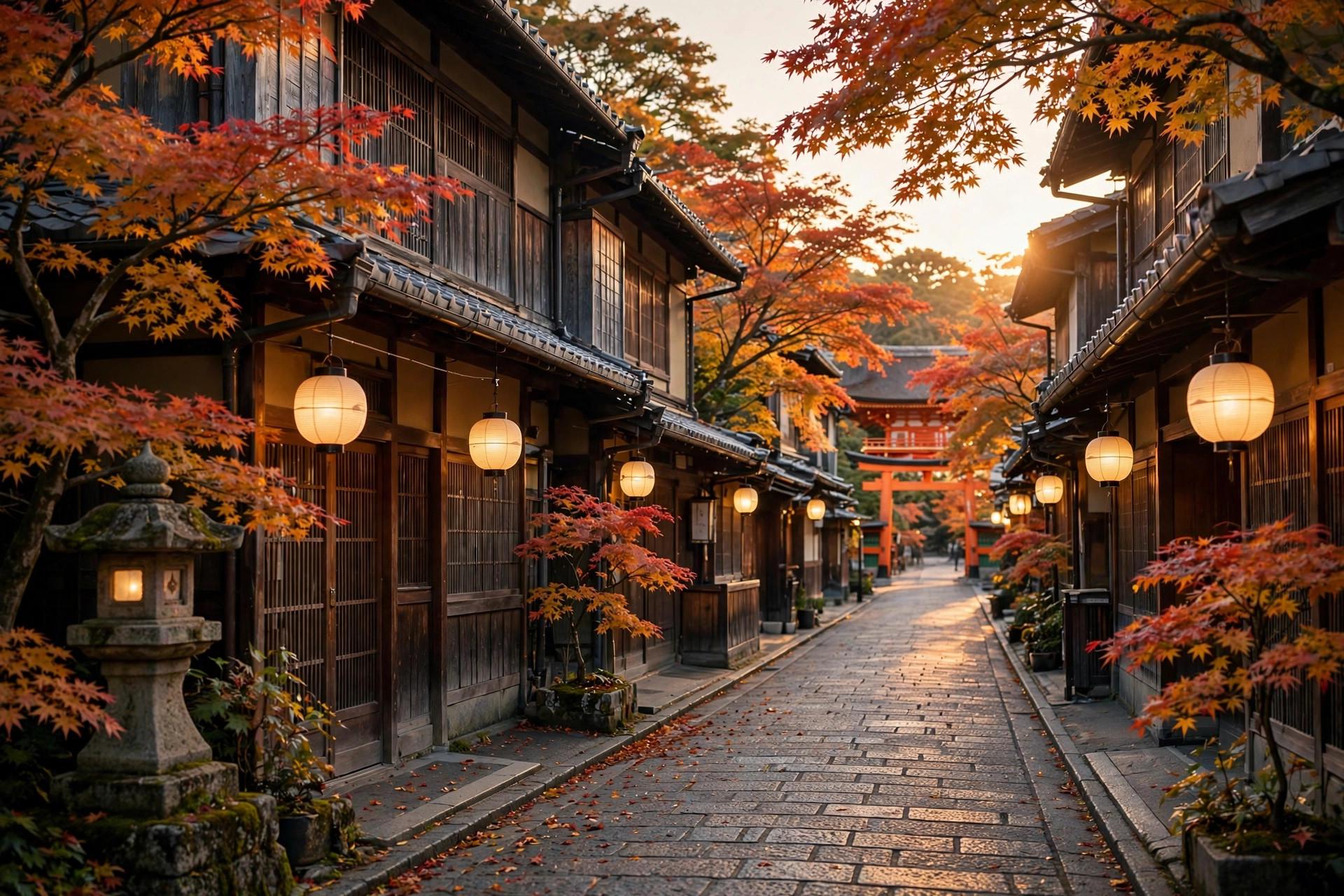
This is the Kyoto of the postcards: preserved machiya townhouses, Yasaka Shrine glowing at dusk, geiko slipping down Hanamikoji Street at twilight. Gion and the adjoining Higashiyama district sit along Kyoto’s eastern edge, a compact cluster where you can walk to Kiyomizu-dera, Kodai-ji, and the Philosopher’s Path without touching public transit.
Choose this area if atmosphere is the point of your trip. Mornings here are genuinely magical — step out before 8 AM and you’ll have stone-paved lanes to yourself, an hour or two before the day-trip buses roll in. It’s also the most walkable base in the city, which matters in a city where buses bunch up during cherry blossom season and autumn foliage.
The tradeoffs are real, though. Gion is the priciest part of Kyoto to sleep in, especially in sakura season (late March to mid-April) and November foliage weeks, when hotels book out months ahead. It’s also east of everything else: getting to Arashiyama means crossing the whole city, about 45 minutes door to door. And late-night food options thin out — this is an early-rising neighborhood, not a night-owl one.
Practical tip: stay on the eastern edge of the subway Tozai line (Higashiyama or Keage stations) rather than deep inside Gion if you want easier city-wide access. You keep the charm but gain a subway ride that skips the crowded bus corridors.
Arashiyama: best for a quieter, slower stay
In Kyoto’s west, Arashiyama feels like a different city — bamboo groves, the Hozu River, temple gardens with almost no one in them before 9 AM. If your idea of a good trip is one major sight a day plus long walks and unhurried meals, this is your neighborhood.
The biggest advantage is proximity to western Kyoto’s quieter gems: Tenryu-ji, Otagi Nenbutsu-ji with its hundreds of quirky stone statues, and the Sagano scenic railway all sit nearby. Evenings are calm, restaurants close early, and the bamboo grove at dawn — genuinely empty before 7 AM — is one of the great free experiences in Japan.
The honest tradeoff is distance. Arashiyama sits at the far western edge of the city, and reaching Higashiyama or Gion takes 40 to 50 minutes by train. If your itinerary is east-heavy (Kiyomizu, Fushimi Inari, Gion), you’ll spend a noticeable chunk of each day in transit. It’s also quiet after dark in a way some travelers find limiting — if you want late dinners and bar-hopping, this isn’t it.
Choose Arashiyama for a second or third visit, a honeymoon, or any trip where “slow down” is the whole brief. For a first visit packed with temples across the city, pair a night or two here with a more central base instead of committing the whole week.
Kyoto Station and Karasuma: best for transport convenience
If your trip is really a Kansai trip — Kyoto as a base with day trips to Nara, Osaka, and maybe Kobe — nothing beats the area around Kyoto Station. The shinkansen, JR lines, and the Kintetsu line all converge here, which means Nara in about 40 minutes and Osaka in under 30 with zero transfers.
The Karasuma corridor, a few stops north of the station along the Karasuma subway line, offers the same convenience with a slightly more local feel — business hotels, department stores, and some of the city’s best everyday eating. The area around Shijo-Karasuma in particular is a sleeper pick: central to everything, well-priced, and never as crowded as Gion.
What you give up is atmosphere. Kyoto Station’s immediate surroundings are office blocks and malls — efficient, not romantic. You’ll be taking transit to every temple and shrine, because none of the great ones are within walking distance. And the station area can feel anonymous in a city people visit precisely for its character.
Still, for a short trip with heavy day-tripping, convenience beats charm. Time saved on transfers is time gained at Nara’s Todai-ji or Osaka’s street-food alleys. If you plan to arrive by shinkansen and leave the same way, the station area also removes the luggage-drag problem entirely.
Sign up for monthly travel guides
Pontocho and Kiyamachi: best for food and nightlife
Pontocho Alley — a narrow lane running between the Kamo River and Takase Canal — is Kyoto’s most storied dining street, packed with izakaya, yakitori counters, and riverside kawayuka terraces in summer. The adjacent Kiyamachi strip extends the options into bars and late-night spots. Together they form the best base for travelers who plan their days around dinner.
Location-wise this area is a sweet spot: you’re between Gion to the east and the downtown shopping of Kawaramachi to the west, with the Keihan line giving you a straight shot south to Fushimi Inari. Evening walks along the Kamo riverbank are one of Kyoto’s simplest pleasures, and they’re on your doorstep.
The caveats: rooms here trend small and lively — light sleepers should check reviews for noise, especially on weekends when the alley hums late. Prices sit between Gion and the station area, and during peak seasons the alley’s popularity means restaurant queues, not just hotel competition. This is a base for people who eat late and sleep in, not for dawn temple runs.
Best for: couples on a food-first trip, anyone combining Kyoto with Osaka nightlife (the Keihan line makes that easy), and travelers who’d rather end the day with a great meal than start it at sunrise.
Kita and the northern districts: best for budget or extended stays
North of the Imperial Palace, neighborhoods like Kita-Oji, Kitayama, and the streets around Doshisha University trade tourist buzz for everyday Kyoto: university cafés, sento bathhouses, residential lanes with gardens you can actually afford to rent near. This is where longer stays and tighter budgets work best.
The draw is value. Weekly-rate guesthouses, small business hotels, and apartment-style stays here cost noticeably less than anything in Gion or downtown, and the savings compound over a two-week trip. The Kinkaku-ji (Golden Pavilion) area and the quiet temples of the Kitayama hills are on your doorstep — and honestly, the Golden Pavilion at opening time with a short walk instead of a long bus ride is a genuine upgrade.
The honest tradeoff is centrality. You’ll be 20 to 30 minutes from most of the headline sights, and the northern districts quiet down early — dinner options skew toward local spots rather than destination restaurants. Transit is fine (the Karasuma subway runs north-south through here) but not thrilling.
Choose the north for a working-from-Kyoto stint, a slow-travel week, or any trip where the lodging budget has to stretch. You’ll see a side of Kyoto most short-trip visitors miss entirely.
How to decide in five minutes
Still torn? Work backward from your two or three non-negotiable days. List the places you absolutely won’t skip, then look at where they cluster on the map. East-heavy itinerary? Stay east. Day trips dominating the plan? Stay near the station. One perfect splurge dinner per night? Stay near Pontocho. The map decides better than any ranking ever will.
A few booking principles that hold across all five areas: book refundable rates when your dates are soft — Kyoto’s peak seasons sell out so far ahead that plans shift, and flexible cancellation is worth the small premium. Check the actual walking route to the nearest station, not just the distance — Kyoto’s grid is walkable, but a “10-minute walk” along a busy arterial at night feels very different from one through a quiet lane. And confirm check-in hours before you book, especially at small guesthouses and machiya rentals, where late arrivals can be a real problem.
Last reviewed: October 12, 2026
TripBuddy may earn a commission when you book through links on this page, at no extra cost to you.
Kyoto’s hotel landscape has a lot of moving parts — seasonal pricing swings, machiya rental rules, and neighborhood tradeoffs that don’t show up on a map. If you’d rather talk it through than guess, talk through your Kyoto options with a TripBuddy travel advisor — we help you match the neighborhood to your trip style before you commit to a booking.
Make it a great Kyoto trip
Where you sleep is only half the plan. If you’re flying in, read our guide to finding better flight deals before you book your tickets — Kyoto is most often reached via Osaka’s Kansai International Airport, and fare timing matters. And once your base is set, our activities page rounds up the experiences worth booking ahead, from tea ceremonies to guided temple walks.
Ready to lock in your neighborhood? Reach out to a TripBuddy advisor and tell us your trip style — first-timer, slow traveler, food lover, or budget stretcher — and we’ll help you pick the Kyoto base that fits.