
TripBuddy Guide
Everyone has heard the legend: slip the front desk a $20 bill with your ID and watch a suite materialize. Or: just ask nicely and the upgrade gods smile. The truth about free hotel upgrades is less cinematic and more useful — upgrades are a system, and once you understand how the system decides, you can tilt it in your favor without tricks.
Here's the honest take first: nobody is entitled to an upgrade, and no technique guarantees one. But hotels upgrade guests every single day for predictable reasons — loyalty status, low occupancy, special occasions, and simple human goodwill. Here's how to be the guest the system picks.
Sign up for monthly travel guides
The short answer: what actually moves the needle
- Loyalty status — the single biggest factor. Elite members get upgraded by policy, not by charm.
- Book direct — hotels upgrade their own guests first; third-party bookings go to the back of the line.
- Travel off-peak — upgrades come from empty better rooms. Full hotels have nothing to give.
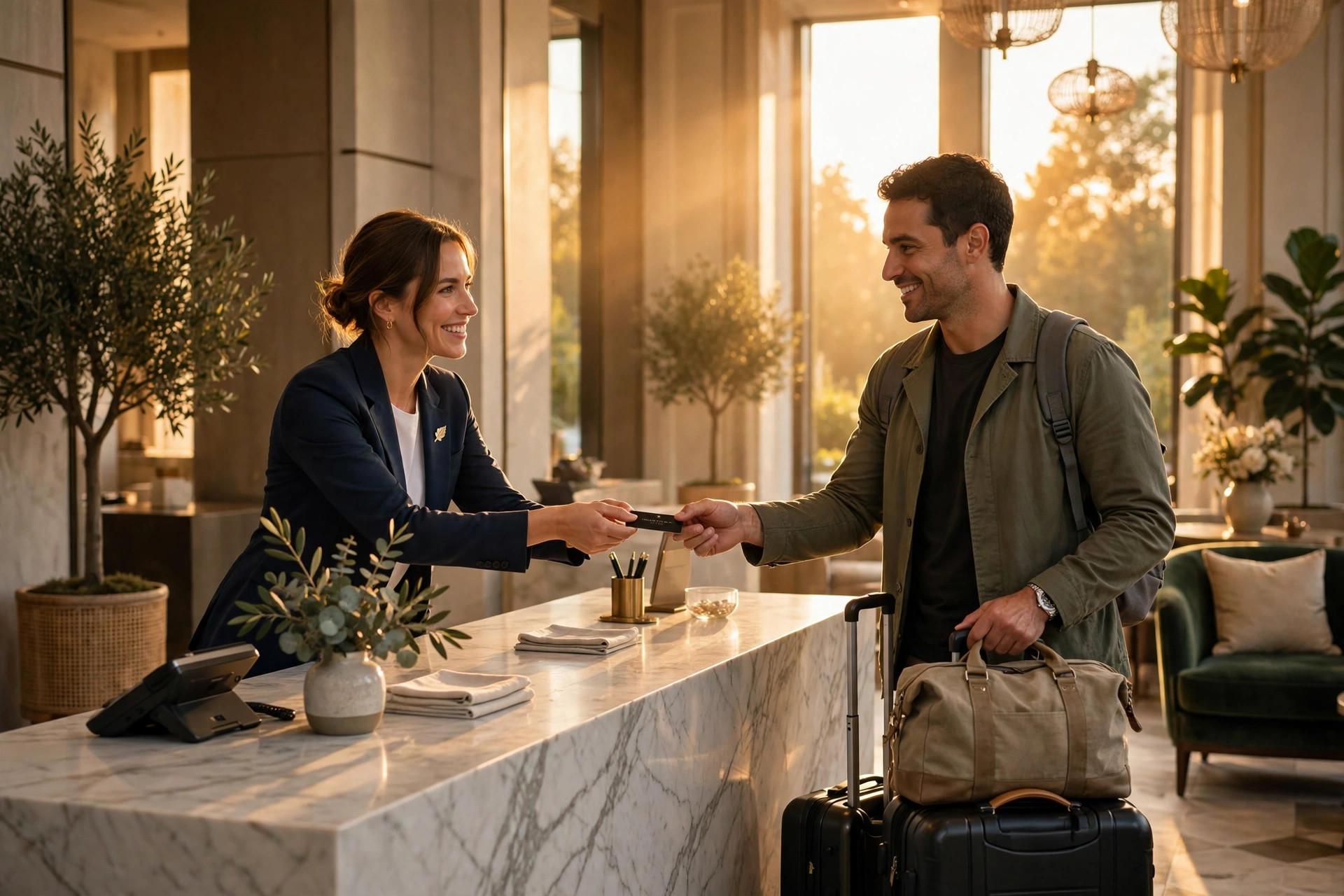
- Ask politely at check-in — "Are there any complimentary upgrades available tonight?" works more often than the internet admits.
- Mention the occasion — honeymoons, anniversaries, birthdays get noted and often rewarded.
- Be kind — front-desk staff upgrade guests they like. This isn't cynical; it's human.
What doesn't work: demanding one, the $20 trick (mostly myth, occasionally insulting), booking the cheapest room during a sold-out conference and expecting a suite.
Understand the system: why hotels upgrade anyone
Upgrades aren't generosity — they're inventory management. A hotel with an empty junior suite and a full house of standard rooms has a choice: leave the suite empty (earning nothing) or move a standard guest up (earning goodwill for free). Upgrades happen when better rooms would otherwise sit vacant.
This tells you everything about timing:
- Low occupancy = upgrade season. Midweek, off-season, the night after a big event leaves town — that's when suites sit empty.
- Sold-out nights = no upgrades. If the hotel is full, there is nothing to upgrade you to. Don't bother strategizing; just hope your assigned room is a good one.
- Shoulder nights of your stay matter. On a multi-night stay, the hotel might upgrade you for the nights a suite is free and move you — or just for one night. Ask.
The second mechanism is loyalty automation. Chain hotels' systems auto-upgrade elite members, often before you arrive — the upgrade is assigned by algorithm, ranked by status tier, then by fare paid. This is why status beats charm: the computer decided before you reached the desk.
The check-in ask: how to do it right
If you don't have status, the check-in desk is your moment. Here's the playbook:
- Check in later in the day, not at 3 PM sharp. Early check-in gets you whatever's ready; later check-in lets staff see the full inventory picture — including which better rooms stayed empty. (Trade-off: the best standard rooms may also be gone. For upgrade hunters, later is usually better.)
- Ask exactly this: "Are there any complimentary upgrades available tonight?" It's direct, polite, and gives them an easy yes. Don't launch into why you deserve it.
- Mention the occasion once, lightly. "We're here for our anniversary" — said with a smile, not as leverage. Staff note occasions on reservations, and noted occasions get remembered.
- Be genuinely pleasant. Front-desk agents field complaints all day. The friendly guest who asks nicely is the one they want to help. This is the highest-ROI move on the list and it costs nothing.
- If they say no, accept it gracefully. "No problem — thanks for checking!" keeps the door open for the rest of your stay. Arguing closes it permanently.
What about the famous $20 trick? Let's be honest: it occasionally works at large Las Vegas-style properties with discretionary upgrade inventory, and it's tacky or ineffective almost everywhere else. In many countries it's just confusing. Politeness outperforms cash — and it's free.
Book in a way that makes upgrades likely
Your reservation choices before arrival matter more than anything you say at the desk:
- Book direct with the hotel. This is the big one. Hotels systematically prioritize their own direct bookers for upgrades — it's one of the documented perks of cutting out the middleman, as our book direct vs. third-party guide explains. Third-party guests are, bluntly, the last in line.
- Join the loyalty program — it's free. Even base-level membership puts you in the system, and some chains upgrade base members when elites have been served. It costs nothing and takes five minutes.
- Book one category below your target. Want a deluxe room? Book a standard. Hotels upgrade within reason — jumping you two categories is rare, one category is routine. Booking the cheapest room in the building and hoping for the penthouse is fantasy.
- Note the occasion on the reservation. Most booking flows have a "special requests" field. "Celebrating our 10th anniversary" in that box gets read.
- Avoid the busiest nights. If your dates are flexible, shifting off the sold-out Saturday night doubles your odds more than any tactic.
Sign up for monthly travel guides
Special situations
- Honeymoons and anniversaries: the highest-probability upgrade trigger outside status. Mention it when booking and at check-in. Bringing a copy of nothing — don't wave a marriage certificate; just be warm about it.
- Solo travelers: hotels love upgrading solo guests into larger rooms — a suite for one costs the hotel nothing extra and generates outsized delight (and reviews). Solo travelers are quietly among the most-upgraded guests.
- Long stays: a week-long booking gives the hotel multiple nights to play with. Mention the length at check-in; an upgrade for even part of the stay is common.
- Repeat guests: "We stayed here last year and loved it" is genuinely powerful at independent hotels. Recognition cuts both ways — they remember you, in the good way.
- Problems become upgrades. If something's wrong with your room, report it politely and promptly — the fix is often a move to a better room. Don't manufacture problems; but don't suffer a broken AC in silence either.
What an upgrade is really worth (and isn't)
Keep perspective: most complimentary upgrades are one category — a slightly bigger room, a better view, a higher floor. The junior-suite-to-presidential-suite fantasy is marketing. A high-floor room away from the elevator, facing the good side of the building, is the realistic win — and it's genuinely worth having.
And never pay for a room counting on an upgrade to fix it. Book the room you'd be happy to keep. An upgrade is a bonus, not a plan. The travelers who enjoy upgrades most are the ones who'd have been fine without them.
TripBuddy may earn a commission when you book through links on this page, at no extra cost to you.
The best upgrade strategy starts with the right booking — direct, in the program, one category below your dream room. Browse hotel options on TripBuddy and set yourself up. Planning a special-occasion trip and want the details right? A TripBuddy travel advisor can help you pick the property most likely to treat you well.
Last reviewed: October 2026